
History of Evolution
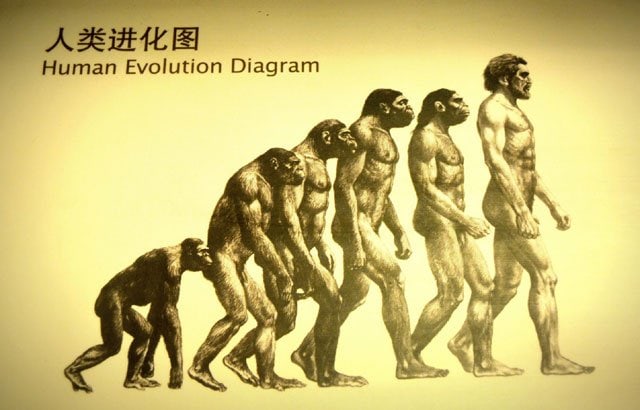
Evolution, in the broadest sense, is a process that results in heritable changes in a population spread over many generations[1]. The Latin word “evolutio” initially meant “unrolling the scroll“. In its metaphorical sense, it suggests that studying evolution is like unraveling a recitation of a story. The story is already written, and all that is required is to read that message[2]. In this page, we will explore the complete history of evolution and interesting events in different centuries that occurred in the study of evolution.
Jump to:
- Father of Evolution
- History of Evolution
- DURING THE 16TH CENTURY
- DURING THE 17TH CENTURY
- DURING THE 18TH CENTURY
- DURING THE 19TH CENTURY
- The 20th Century up to the present
- Top 10 Evolution News In 2017
- Top 15 Evolutionary Biology News in 2018
- Top 2019 Discoveries in Evolution
- Top 10 Evolutionary Biology News of 2020
- Top 15 Evolutionary Biology News of 2021
- Top 15 Evolutionary Biology News of 2022
Father of Evolution
Charles Darwin is considered by many as the “Father of Evolutionary Thought“. However, this credit shouldn't be on Darwin alone since he was guided by the works of different scientists before him. Darwin himself did not know about heredity hence his theory of natural selection is only limited to his observations during that time[1].
History of Evolution
DURING THE 16TH CENTURY
- European scholars could access only a basic understanding of the anatomy of animals and humans as their knowledge is solely limited to their observations.
- Natural theology, a branch of theology and philosophy that deals with the proving of God's existing and deriving doctrines based on human reason, emerged[3].
DURING THE 17TH CENTURY
-
1660:
 Nicholas Steno proposed that fossils once belonged to living creatures. He also claimed that fossils are the key evidence for how life evolved on Earth over the past four billion years[4].
DURING THE 18TH CENTURY
-
1758:
 Carolus Linnaeus (Carl von Linne) introduced the idea of identifying, naming, describing and classifying organisms (species). His hierarchical classification is based on the fact that species was the smallest unit, and each species (taxon) is under a higher category[4].
 -
1780-1799:
 Scientists George Leclerc and Comte de Buffon proposed that species could change. This idea was a major break since it challenged the earlier belief that species could not change because they were already perfect, as a perfect creator created them. Buffon provided some evidence of the said changes and modifications. He also stated that various factors, including migration, geographical isolation, influences of the environment, overpopulation, and struggle for existence, could influence that change. Unfortunately, Buffon later claimed that he believed in special creation and debunked his idea of the modifications of species.
 -
1790s:
 Two scientists named Abraham Werner and George Cuvier proposed the theory of Catastrophism. This theory states that the planet Earth and the geological events formed rapidly and suddenly due to a great catastrophe. This idea became widely accepted because it relates to biblical events like Noah's flood. However, James Hutton challenged the theory of Catastrophism. He argued that gradual and slow changes transformed the Earth. These changes may be tiny, but with enough time, they could produce great changes[5].
 -
1798:
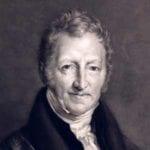 Thomas Malthus stated that human populations could double every 25 years. After that, the population would gradually exceed the food supply, leading to starvation and war. Eventually, such events will reduce the population[5].
DURING THE 19TH CENTURY
-
Early 1800s:
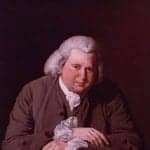 Erasmus Darwin (Charles Darwin's grandfather) suggested the possibility of a common ancestor based on the changes undergone by organisms during development and the presence of vestigial structures. While he proposed that species do change over time, he did not provide any mechanism to explain his idea.
 -
1800-1810s:
The Principle of Biological Succession was developed by William Smith. It states that every period of Earth’s history has a unique collection of fossils. William Smith later became the "Father of Stratigraphy", which is a science that deals with the correlation of rock layers depending on their fossil contents[4].
-
1801:
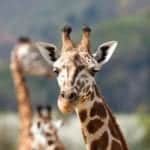 Jean Baptiste de Lamarck developed one of the first theories about how species change. He stated that more complex organisms had “evolved” from pre-existing, less complex organisms.
Lamarck's fame rose when he introduced the idea of the inheritance of acquired characteristics to explain the length of the giraffe’s neck. According to that view, the long necks of giraffes were acquired from their ancestors (who previously had shorter necks), who continually stretched their necks to reach food in high trees. This continuous use of stretching the necks resulted in their development of longer necks, which was somehow passed on to their offspring[4].
Lamarck's idea of “evolution” did not immediately become acceptable to many as it contradicted biblical views regarding creation. Another factor is that Lamarck did not provide any mechanism to explain it. -
1830:
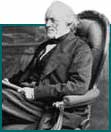 A scientist named Charles Lyell published his theory of Uniformitarianism, which was inspired by James Hutton's previous idea of gradual changes. This theory states that the processes that alter the Earth are uniform through time[5].
 -
1859:
Charles Darwin, after his voyage and spending time in the Galapagos Islands, proposed his theory of evolution and adaptation. The theory stated that:
[1] – All kinds of organisms adapt to their environment.
[2] – All organisms have variable traits.
[3] – Organisms tend to over-reproduce (this idea was based on Thomas Malthus’s study of how populations tended to grow geometrically until there was a limit in their population).
[4] – The idea of natural selection, which is more commonly referred to as "survival of the fittest".
The idea of natural selection states that some organisms will survive and reproduce better than others. However, natural selection only deals with the reproductive success of the organisms, not only their relative strength or speed.
Charles Darwin made collaboration with Alfred Russel Wallace, who previously was the first to define the role of natural selection in species formation. Charles Darwin eventually published his renowned and highly recognized book On the Origin of Species using Natural Selection[4].
To be correct, it is important to note that Darwin and Wallace developed the theory of natural selection.
Although Charles Darwin and Alfred Russel Wallace’s theory of natural selection displaced Lamarck's previous theory, some efforts were still made to revive it and continued[4].
The 20th Century up to the present
- Geneticists began to realize that natural selection could indeed work on genes. It became clear to them that any trait is a product of the expression of various genes rather than a single one. Also, the concept of mutation, or any changes in the genome of an organism that can be passed on to the next generation, was introduced[5].
- The field of “Modern Synthesis,” or the incorporation of genetics and the ideas of natural selection, came about in the early 20th century.
- As scientists have begun to isolate these regulatory genes, they’ve been shocked at how powerful they are and how long they’ve been in power throughout evolution.
- It has been known that only bacteria can incorporate uninheritable traits.
Top 10 Evolution News In 2017
Top 15 Evolutionary Biology News in 2018
Top 2019 Discoveries in Evolution
Top 10 Evolutionary Biology News of 2020
Top 15 Evolutionary Biology News of 2021
Top 15 Evolutionary Biology News of 2022
Cite this page
Bio Explorer. (2026, March 21). History of Evolution. https://www.bioexplorer.net/history_of_biology/evolution/