
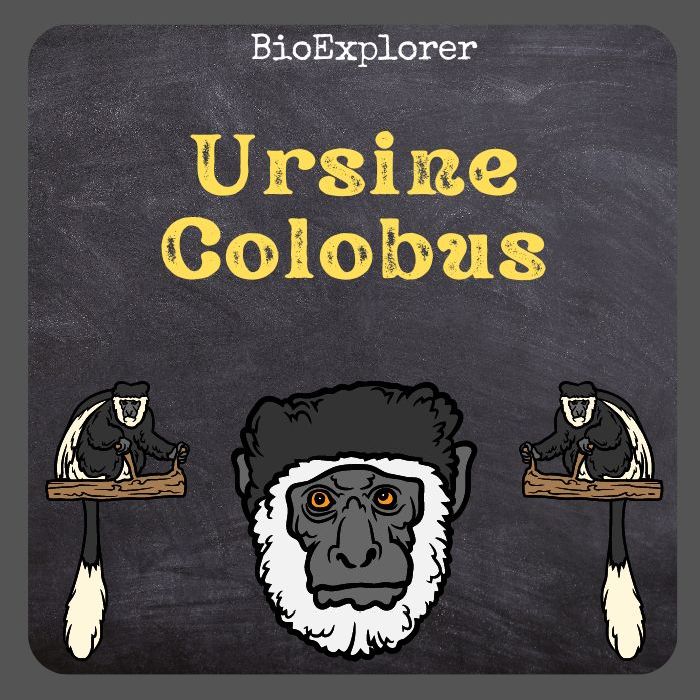
Ursine Colobus
| Kingdom | Order | Family | Genus | Species |
|---|---|---|---|---|
| Animalia | Primates | Cercopithecidae | Colobus | Colobus vellerosus |
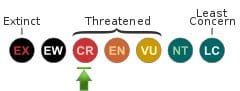
- Common Name: Ursine Colobus
- Taxonomy Classification Year: 1834
- Monkey Size: 61 to 66 cm (24 to 26 in)
- Skin Color(s): Black
- Habitat: Savanna or grassland, forest, rainforest
- Diet: Omnivorous
- Native Countries: Benin, Ivory Coast, Ghana, Nigeria, Togo, Burkina Faso

Ursine Colobus Distribution
Countries
Benin ( )
)
)
Ivory Coast ( )
)
)
Ghana ( )
)
)
Nigeria ( )
)
)
Togo ( )
)
)
Burkina Faso ( )
)
)Ursine Colobus Characteristics
The white-thighed colobus[1] (Colobus vellerosus), also known as ursine colobus, white-thighed black-and-white colobus, and Geoffroy’s black-and-white colobus, is a species of primate in the Cercopithecidae family.
- It is found in Benin, Ivory Coast, Ghana, Nigeria, Togo, and southern Burkina Faso. Its natural habitat is tropical or subtropical moist lowland forests.
- White-thighed colobus monkeys have muscular bodies covered in long, glossy black fur except for their silvery thighs.
- Their black faces are elongated with two prominent eyes, a flat nose, and thin black lips. Black ears rest on its head.
- White hair frames the face, making this monkey look like a sage. The white fur band over the eyes is shaped differently in each monkey. It is a helpful feature for identifying individuals in a group.
- Its hands are perfectly articulated, with an underdeveloped thumb, long fingers, and shiny black nails. Their feet have long toes and an opposable “big toe“.
- Rump calluses are common in white-thighed colobus monkeys and provide a cushion for perching on hard branches.
- Its long, slightly bushy white tail is helpful for balance in trees. Babies are born entirely white except for the face, ears, and fingers. They switch to adult coloring after 3 to 4 months.
What Eats Ursine Colobus?
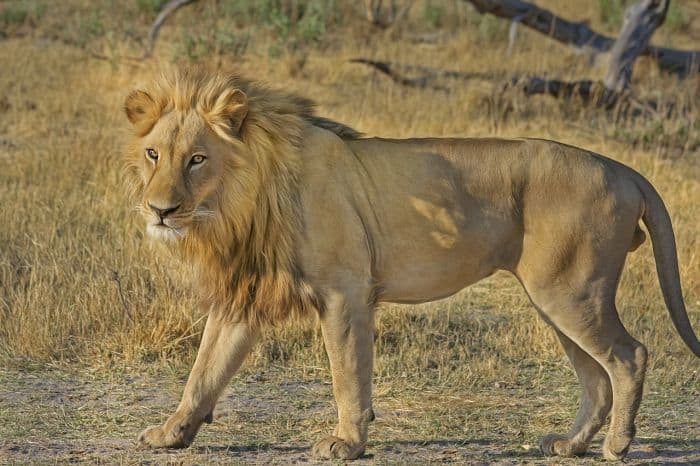
According to the African Journal of ecology[§], Lions (Panthera leo) and Leopards (Panthera pardus) are the primary predators of Ursine Colobus monkeys in the wild.
Ursine Colobus Facts
- White-thighed colobus monkeys are diurnal and primarily arboreal (although they may occasionally move on the ground between foraging areas on the savannah).
- They use different roosting sites each night, some near feeding sites. They can be nests made out of leaves, holes, or branches in a tree, usually selected where there is less risk of predators.
- It seems that adult women spend more time grooming themselves than adult men. However, neither females nor males are very affectionate.
- White-thighed colobus monkeys live in groups that vary significantly in size, from 5 or 7 to more than 30 individuals. These groups can be mixed (several males and several females), solitary males (one male and several females and juveniles), or all males.
- Adult male white-thighed colobus monkeys use loud roars to call their territory and location. The roar can be multiple times and in concert with other groups, especially in the mornings.
Suggested Reading: Types of Monkeys
Cite this page
BioExplorer. (2026, September 24). Ursine Colobus. https://www.bioexplorer.net/animals/mammals/monkeys/ursine-colobus/