
Tenasserim Langur
| Kingdom | Order | Family | Genus | Species |
|---|---|---|---|---|
| Animalia | Primates | Cercopithecidae | Trachypithecus | Trachypithecus barbei |

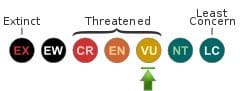
- Common Name: Tenasserim Langur
- Taxonomy Classification Year: 1847
- Monkey Size: 46 to 51.4 cm (18 to 20 in)
- Skin Color(s): Grayish black
- Habitat: Forest
- Diet: Herbivorous
- Native Countries: Myanmar, Thailand

Tenasserim Langur Distribution
Countries
Myanmar ( )
)
)
Thailand ( )
)
)Tenasserim Langur Characteristics
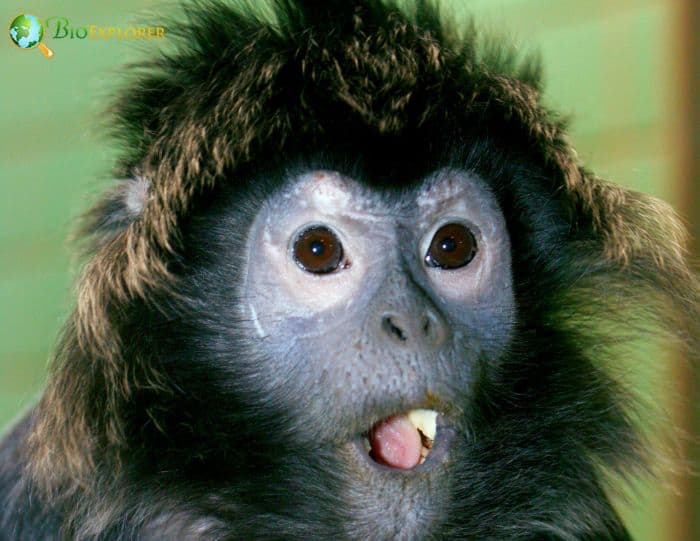
Tenasserim lutung[1] (Trachypithecus barbei) is a species of lutung. It occurs in Thailand and Myanmar.
- Phylogenetic evidence suggests that Tenasserim lutung is an ancestor of the much more widespread Indochinese gray langur (Trachypithecus crepusculus), with Trachypithecus crepusculus being a product of ancient hybridization between Tenasserim lutung and langurs of the Obscurus ancestor group.
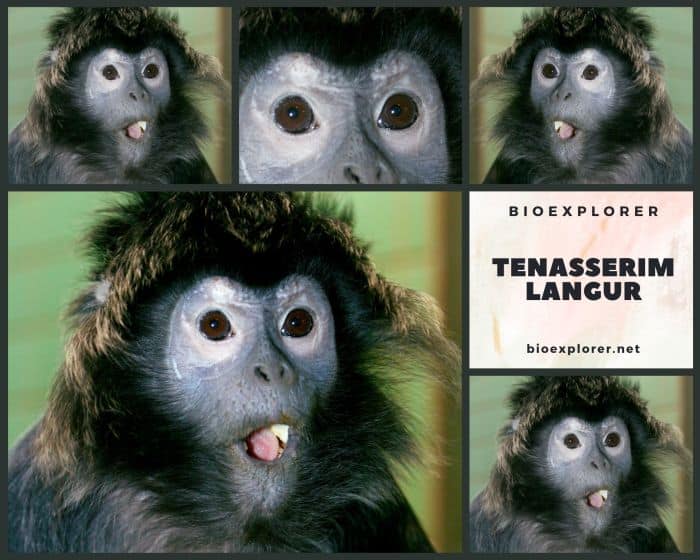
- The general color of this Lutung is gray-black without silver and slightly lighter ventrally. The tail is dark grey, slightly paler than the body.
- The base of the tail and the area around the ischial calluses are whitish. The long, erect hair on the crown forms a distinctive crest. The face is gray with a purple tint.
- The animal has whitish rings that completely surround the eyes and a depigmented area in the mouth typical of the Trachypithecus obscurus group leaf monkeys.
- It differs from Trachypithecus obscurus in that the crown and legs do not contrast more than the body.
- It also differs from Trachypithecus phayrei by having no tan or buff coat.
- It is also distinguished from T. p. phayrei in the absence of contrasting pale underparts, of T. p. crepusculus in the presence of large white circles, and both T. p. shanicus and T. p. crepusculus in its much darker general color.
Tenasserim Langur Facts
- The species derived its common name from the Tenasserim Hills.
- The Tenasserim Lutungs live a predominantly arboreal lifestyle in the trees. They are diurnal, meaning most of their daytime activities occur until sunset.
- They are pretty shy, particularly when around people. However, if they feel threatened, they quickly retreat into the trees.
- From time to time, conflicts arise between groups, usually over territory. These conflicts usually arise in areas where ranges overlap.
- Social play occurs primarily in adolescents and infants of both sexes. However, it was observed that all age groups participated in the game.
Suggested Reading: Various Species of Monkeys
Cite this page
BioExplorer. (2026, September 24). Tenasserim Langur. https://www.bioexplorer.net/animals/mammals/monkeys/tenasserim-langur/