
Sooty Mangabey
| Kingdom | Order | Family | Genus | Species |
|---|---|---|---|---|
| Animalia | Primates | Cercopithecidae | Cercocebus | Cercocebus atys |

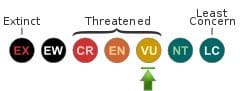
- Common Name: Sooty Mangabey
- Taxonomy Classification Year: 1797
- Monkey Size: 40 to 67 cm (15.75 to 26.38 in)
- Skin Color(s): Ash-gray
- Habitat: Forest, rainforest
- Diet: Omnivorous
- Native Countries: Ivory Coast, Guinea, Guinea-Bissau, Liberia, Senegal, Sierra Leone

Sooty Mangabey Distribution
Countries
Ivory Coast
Guinea
Guinea-Bissau
Liberia
Senegal
Sierra Leone
Sooty Mangabey Characteristics
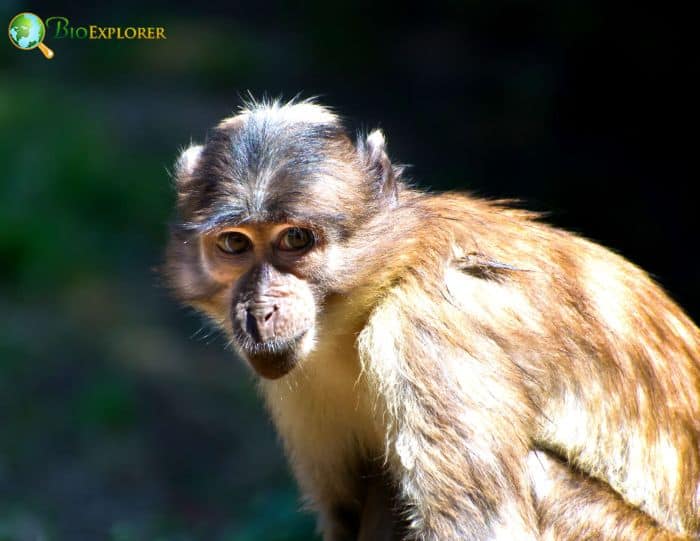
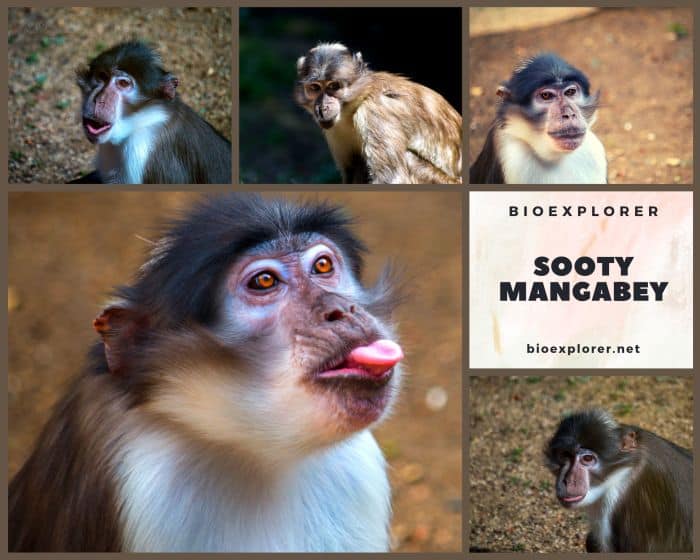
The sooty mangabey[1], also called the white-collared or white-crowned mangabey is a predominantly terrestrial Old-World monkey.
- They are endemic to Sierra Leone, Guinea, Guinea-Bissau, Senegal, Liberia, and Ivory Coast. Due to habitat loss, these primates are eradicated from their ranges.
- They are mostly considered extinct in Senegal, Guinea-Bissau, and parts of Guinea. Imagine the soot that envelopes you after cleaning a fireplace or the ashes left in your fireplace when you go camping; this is the color of sooty mangabeys.
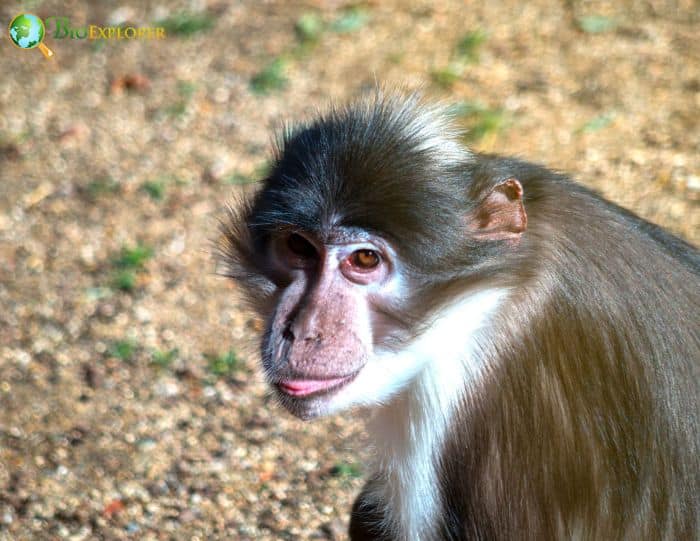
- These animals are covered in dark ash gray fur; the underside fur is lighter, smoky gray. However, their hands, feet, and ears are dark gray or black.
- The Soot Mangabey’s hairless facial skin is salmon pink or mottled gray, and its long snout is dark.
- Light-colored whiskers extend from the monkey’s cheeks, contrasting the dark fur that frames the face.
- Pale white eyelids suggest an expression of surprise. Sooty mangabeys use their glowing eyelids by raising and lowering them to communicate with others.
What Do Sooty Mangabeys Eat?
Sooty Mangabeys get nourishment from these sources[¶]:
- Boleko Nut (Ongokea gore).
- Ohia (Celtis zenkeri)
- Leaf Flower (Phyllanthus)
- Chinese Banyan (Ficus thonningii).
- Fig (Ficus)
- Guanabanilla (Ouratea striata)
- Chinalaurel (Antidesma)
- Hairy Rock Fig (Ficus glumosa).
- Sacred Garlic Pear (Crateva religiosa).
- Persimmons (Diospyros)
- Raphia Palm (Raphia africana).
- African Nutmeg (Pycnanthus angolensis).
Sooty Mangabey Facts
- Sooty mangabeys remember the location of the fallen fruit and can tell whether or not a tree is bearing fruit.
- Mothers have been observed nursing their babies with a rock, but researchers aren’t sure why. Nevertheless, this may be an example of tool use.
- Soot Mangabey is incredibly good at stalking predators.
- In the Sooty Mangabey community, males are dominated, with an alpha male at the top, followed by the other males in the hierarchy, and an alpha female, followed by the other females in the group.
- Wandering males are known to commit infanticide. They intentionally kill the young of an established group in an attempt to gain control of the group and sire their own offspring.
Suggested Reading: Different Types of Monkeys
Cite this page
Bio Explorer. (2026, January 28). Sooty Mangabey. https://www.bioexplorer.net/animals/mammals/monkeys/sooty-mangabey/