
Sanje Mangabey

| Kingdom | Order | Family | Genus | Species |
|---|---|---|---|---|
| Animalia | Primates | Cercopithecidae | Cercocebus | Cercocebus sanjei |
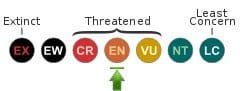
- Common Name: Sanje Mangabey
- Taxonomy Classification Year: 1986
- Monkey Size: 50 to 65 cm (20 to 26 in)
- Skin Color(s): Pinkish or greyish
- Habitat: Forest, mountain
- Diet: Omnivorous
- Native Countries: Tanzania

Sanje Mangabey Distribution
Countries
Tanzania
Sanje Mangabey Characteristics
Sanje mangabey[1], also called the Sanje crested mangabey and Sanje River mangabey, are Old World Monkeys endemic to Tanzania, a sovereign state in East Africa.
- They are found only in the Udzungwa Mountains of Tanzania and live on the eastern slopes at various elevations from 1, 312 to 4, 266 feet (400 to 1, 300 m) above sea level.
- Sanje mangabey is a medium-sized monkey. The sexes look alike, but the males are slightly larger than the females.
- The muzzle is gray, while the skin on the rest of the face is grayish or pinkish with a bluish edge to the hairline.
- The eyelids and the area under the eyes are particularly pale. The hair on the Crown is longer than elsewhere and tends to have a parting or a slight swirl.
- The hairs on the back, sides, and limbs have creamy gray bases and dark gray shafts edged in yellowish-orange and black.
- The hairs on the underside are long and pale yellowish-orange. The extremities of the limbs, as well as the hands and feet, are dark gray.
- The bare skin under the tail is bluish-gray with a pink tinge, and the calluses on the ischium are pink. The long gray tail has a longer tuft of hair at the tip.
Sanje Mangabey Facts
- Some Sanje mangabeys prefer their own company to that of others and live alone; others are more friendly and live in groups with several males and females.
- There is a clear dominance hierarchy among adult males; a lower hierarchy can be observed among the women in a group.
- In “emigration“, adult males leave their natal group when they reach sexual maturity to seek out or form a group in which they can be alpha males.
- On trees, these African primates are often found in the undergrowth of montane and submontane forests. They use their long tails for balance.
- Sanje mangabeys are active during the day, which makes them “diurnal“.
Suggested Reading: All About Monkeys
Cite this page
Bio Explorer. (2026, January 28). Sanje Mangabey. https://www.bioexplorer.net/animals/mammals/monkeys/sanje-mangabey/