
Roloway Monkey
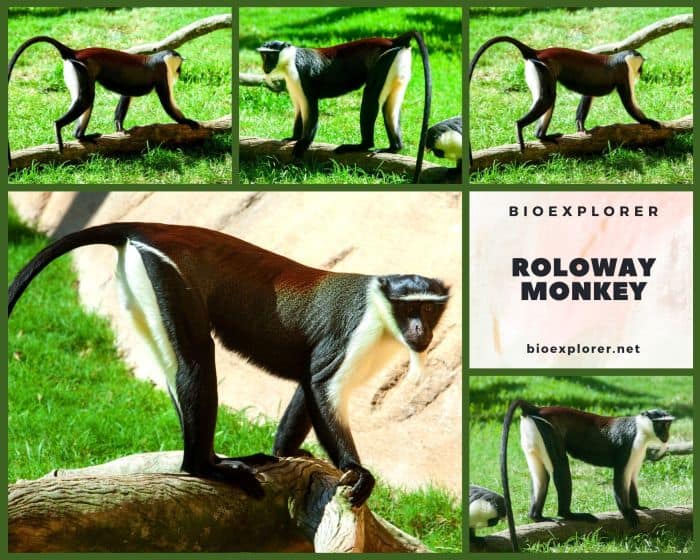
| Kingdom | Order | Family | Genus | Species |
|---|---|---|---|---|
| Animalia | Primates | Cercopithecidae | Cercopithecus | Cercopithecus roloway |
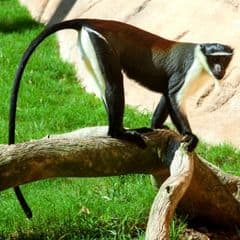
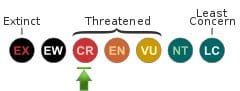
- Common Name: Roloway Monkey
- Taxonomy Classification Year: 1774
- Monkey Size: 57 to 64 cm (22 to 25 in)
- Skin Color(s): Dark gray
- Habitat: Forest, Rainforest
- Diet: Omnivorous
- Native Countries: Ghana, Ivory Coast

Roloway Monkey Distribution
Countries
Ghana ( )
)
)
Ivory Coast ( )
)
)Roloway monkey Characteristics
Roloway monkeys[1] (Cercopithecus roloway), also called Roloway guenons, are Old World Monkeys native to Ghana and the Ivory Coast.
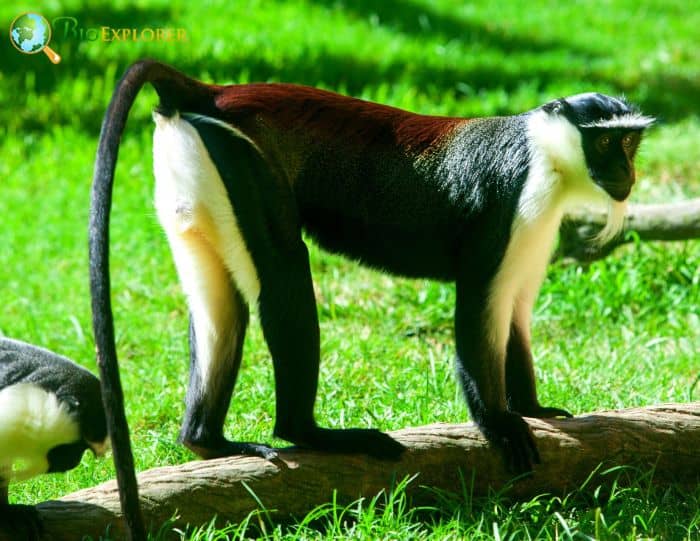
- They remain fantastically invisible in the dense canopies of moist, mature forests, swamps, and plains.
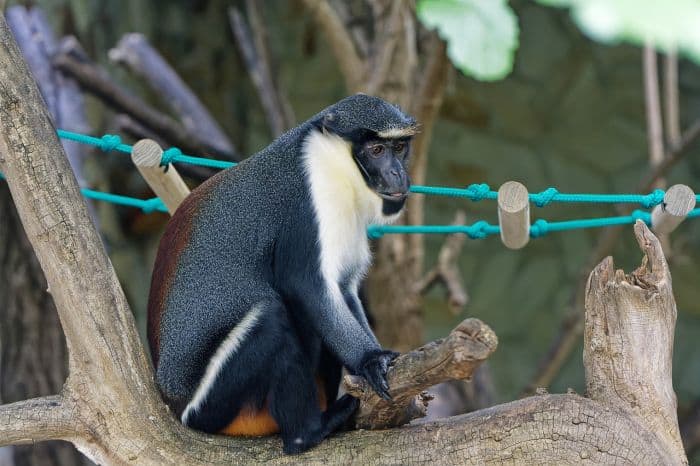
- Roloway monkeys resemble Diana monkeys in appearance, a species with which they were once confused.
- They both have dark gray fur that covers much of their upper bodies, with prominent purple spots on their lower backs and red fur along their inner thighs.
- In stark contrast, the chest and outer thighs are light beige. The same hue marks their forearms and ears, and features long beards flowing down from their chins.
- Certain characteristics set Roloway monkeys apart from Diana monkeys.
- Most notable is their long beards, which grow 2/3 longer than their cousins.
- The strips of beige fur on their eyebrows also appear more defined than those of the Diana monkeys.
- Less noticeable are the lack of ear tufts, the lighter fur on the inner thighs, and the purple spots on the back, which tend to rise higher.
- Males are distinguished from females by their larger bodies and longer canines. Otherwise, the sexes are relatively similar.
Roloway Monkey Facts
- Roloway monkeys are diurnally roaming the forest with their groups in search of insects or fruit to eat.
- Directly and quietly, they crawl on all fours over branches from one tree to another. They rarely perform acrobatic leaps that might attract unwanted attention.
- Besides being extremely rare, Roloway monkeys are also elusive. Not only do they avoid humans, but they actively flee when in close proximity.
- During breaks, their group takes time to socialize. Babies play, practice the skills that help them grow into successful adults, and adults nurture each other, forming and maintaining their relationships and bonds.
- Like their closest relatives, the Diana monkeys, each group consists of a single male, several females, and their young.
Suggested Reading: Different Kinds of Monkeys
Cite this page
BioExplorer. (2026, September 24). Roloway Monkey. https://www.bioexplorer.net/animals/mammals/monkeys/roloway-monkey/