
Pygmy Marmoset (Finger Monkey)

| Kingdom | Order | Family | Genus | Species |
|---|---|---|---|---|
| Animalia | Primates | Callitrichidae | Cebuella | Cebuella pygmaea |
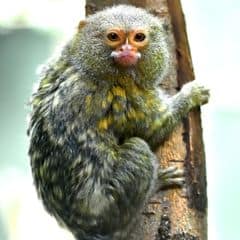
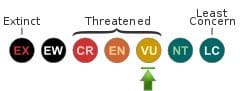
- Common Name: Pygmy Marmoset
- Taxonomy Classification Year: 1823
- Monkey Size: 11.7 to 15.2 mm (4.6 to 6.0 in)
- Skin Color(s): Brownish-gold, gray, and black
- Habitat: Rainforest
- Diet: Omnivorous
- Native Countries: Bolivia, Brazil, Colombia, Ecuador, Peru

Pygmy Marmoset Distribution
Countries
Bolivia ( )
)
)
Brazil ( )
)
)
Colombia ( )
)
)
Ecuador ( )
)
)
Peru ( )
)
)Pygmy Marmoset Characteristics
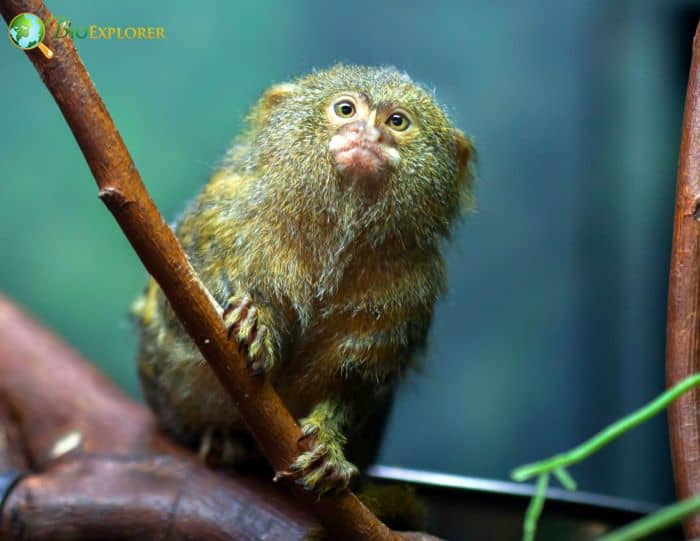
The pygmy marmoset[1], genus Cebuella, is a small genus of New-World monkeys endemic to the Tropical Rainforests of the western Amazon Basin in South America. It is also known as the finger monkey.
- A fawn and gray fur coat are identified by a yellow, green, and black tick on the head and back.
- The babies initially have a gray head and yellow fur covered with black spots but show the adult pattern during the first month of life.
- Although pygmy marmosets are not considered sexually dimorphic, females are slightly larger than males.
- Longer hair around the face and neck makes Cebuella pygmaea appear like a lion’s mane. The front legs are smaller than the hind legs, and the toes have claws called tegulae.
- The average adult tail, usually marked with black bands, is about 20 cm long. Similar eastern and western subspecies are challenging to tell apart but sometimes show different ventral hair colors.
Pygmy Marmoset Fun Facts
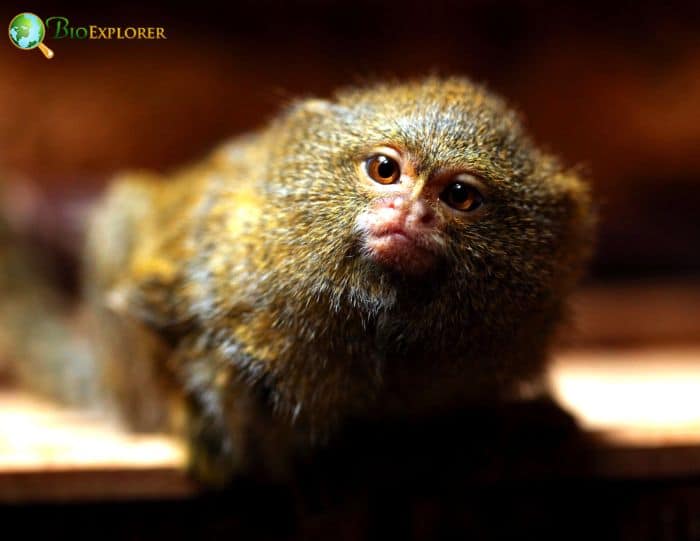
Here are ten uncommon and interesting facts about the Pygmy marmoset, also known as the Finger Monkey:
- Smallest True Monkey: Pygmy Marmosets are one of the smallest primates and the smallest true monkey in the world. They measure just 4.6 – 6 inches in length and weigh approximately 100 grams[2].
- Gum Lovers: These tiny monkeys are considered gummivores; their diet primarily consists of tree sap. They have special incisors that allow them to scrape into the tree bark to release the sap.
- Impressive Jumpers: Despite their tiny size, Pygmy Marmosets can jump over 5 meters (16 feet) between tree branches[3].
- Complex Communication: Pygmy Marmosets use a complex vocal repertoire and scent glands all over their body to communicate. Their ‘babbling’ follows patterns similar to human baby speech[4].
- Head Rotation: As an adaptation to living in trees, the Pygmy Marmoset has developed the ability to turn its head in the opposite direction, giving it a 360-degree field of view.
- Twin Births: Pygmy Marmosets almost always give birth to twins. The father is very active in his care of the young, helping to deliver, clean, and carry them for the first few weeks[5].
- Temperature Regulation: Pygmy Marmosets have the lowest basal rate of metabolism than any monkey measured. This means they struggle not to lose heat due to their tiny bodies, making them particularly vulnerable to climate change.
- Tree Falls: One of the main causes of death of all monkeys, particularly in infants, is falling from trees. Despite all their adaptations, thriving at such a height takes a lot of skill and learning.
- Threat from Pet Trade: Sadly, their popularity as a novelty item has led to them being hunted to vulnerable status in their natural habitats. Even tourism has an impact on their behavior, making them shy, nervous, and less friendly with one another.
- Bad Pets: Despite their cute appearance, Pygmy Marmosets make bad pets. They are emotionally and cognitively intelligent and are capable of immense mental stress. The pet trade often results in emotionally, psychologically, and often physically damaged individuals.
Suggested Reading: Different Types of Small Monkeys
Cite this page
BioExplorer. (2026, August 26). Pygmy Marmoset (Finger Monkey). https://www.bioexplorer.net/animals/mammals/monkeys/pygmy-marmoset/