
Phayre’s Langur
| Kingdom | Order | Family | Genus | Species |
|---|---|---|---|---|
| Animalia | Primates | Cercopithecidae | Trachypithecus | Trachypithecus phayrei |
- Common Name: Phayre’s Langur
- Taxonomy Classification Year: 1847
- Monkey Size: 44 to 61 cm (17.3 to 24 in)
- Skin Color(s): Dark gray-blue
- Habitat: Rainforest
- Diet: Herbivorous
- Native Countries: India, Bangladesh, Myanmar

Phayre’s Langur Distribution
Countries
India ( )
)
)
Bangladesh ( )
)
)
Myanmar ( )
)
)Phayre’s Langur Characteristics
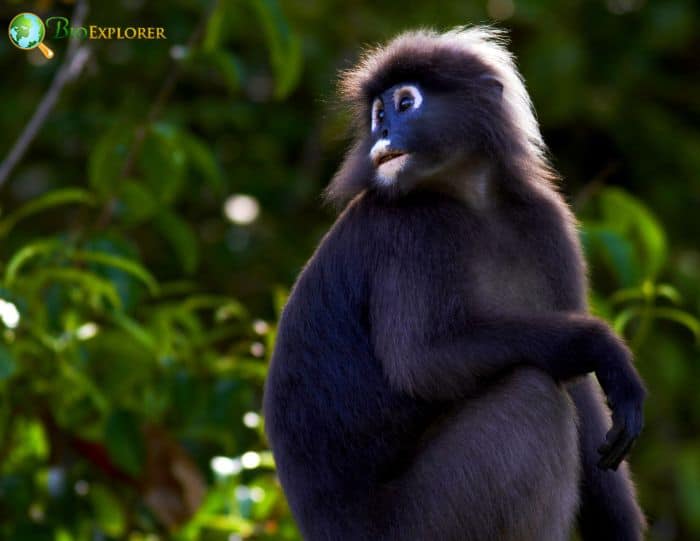
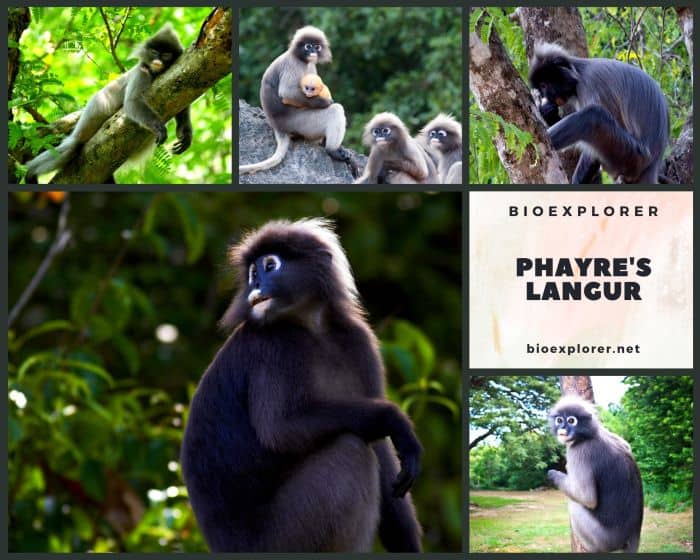
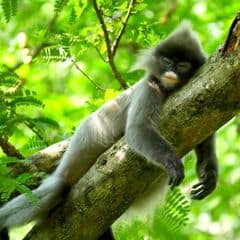
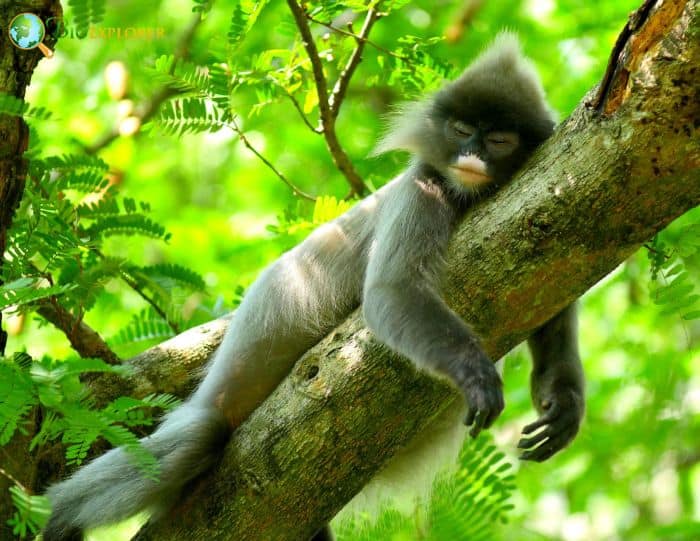
Phayre’s leaf monkey[1] (Trachypithecus phayrei), also called the Phayre’s langur, is a species of Lutung endemic to South and Southeast Asia.
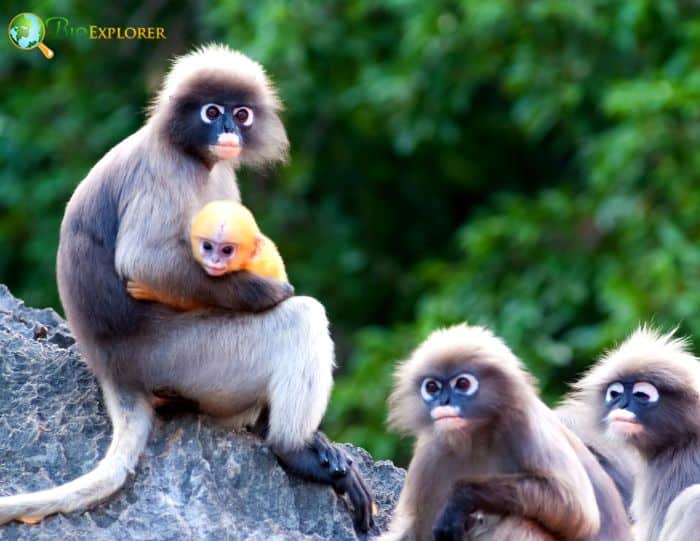
- Nature has created a fascinating creature in Phayre’s Leaf Monkey. Infants are darling, wrapped in tangerine-colored fur coats.
- At around three months of age, their fur changes to a silky, silver-blue coat with random spots of brown.
- The underside of the monkey is white, tinted with light brown tones. Adults wear a fluffy, dark gray beanie on top of their heads, giving them a slightly punk rock look.
- Their long, non-prehensile tail is the same shade of dark gray as the punk-rock “beanie” they wear.
- But it’s Phayres’ leaf monkey face that charms and makes people love it. Nature has dusted the skin around the monkey’s dark, inquisitive eyes with large white rings that contrast with a blue-black outline that also paints the bridge of the monkey’s nose.
- Nature powdered the area around the white monkey’s mouth using the same pressed powder she used around the eyes. She then placed some whiskers on the chin to complete Phayre’s leaf monkey seductive face.
Phayre’s Langur Facts
- The name commemorates the late Sir Arthur Purves Phayre, a lieutenant general in the British Indian Army and commissioner of the entire province of former British Burma.
- Nature has endowed these monkeys with specialized, highly adapted, multi-chambered stomachs that can digest plant cellulose, detoxify toxins from the leaves they eat, and absorb nutrients better.
- Group size varies from 3 to 30 individuals (larger numbers are rare but not uncommon), depending on habitat and country of residence.
- Females are sometimes closely related, but a dominance hierarchy between them is unknown. They rarely leave their natal group.
- An embattled alpha male lets out a loud, menacing roar to thwart the capricious intentions of an intruding male.
Suggested Reading: Monkey Species
Cite this page
BioExplorer. (2026, August 26). Phayre’s Langur. https://www.bioexplorer.net/animals/mammals/monkeys/phayres-langur/