
Malbrouck
| Kingdom | Order | Family | Genus | Species |
|---|---|---|---|---|
| Animalia | Primates | Cercopithecidae | Chlorocebus | Chlorocebus cynosuros |
- Common Name: Malbrouck
- Taxonomy Classification Year: 1786
- Monkey Size: 30 to 60 cm (12 to 24 in)
- Skin Color(s): Olive-gray
- Habitat: Forest, rainforest, mountain
- Diet: Omnivorous
- Native Countries: Democratic Republic of Congo, Namibia, Zambia

Malbrouck Distribution
Countries
Democratic Republic of Congo ( )
)
)
Namibia ( )
)
)
Zambia ( )
)
)Malbrouck Characteristics
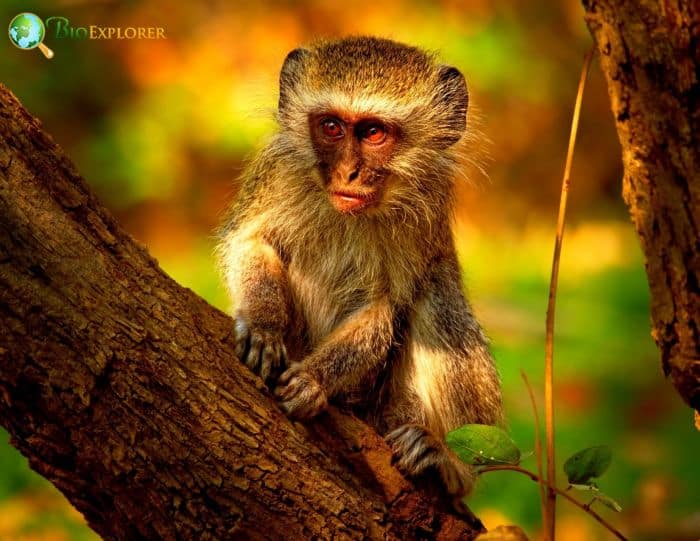
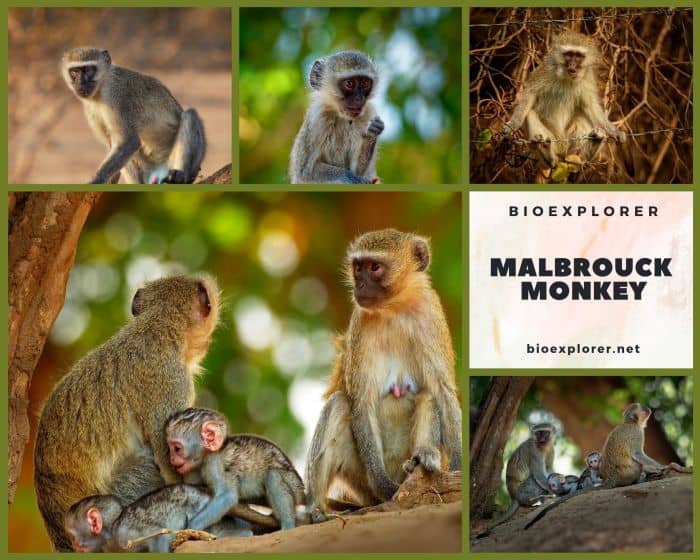
The Malbrouck[1] (Chlorocebus cynosuros) is an Old-World primate from Africa that belongs to the Chlorocebus genus.
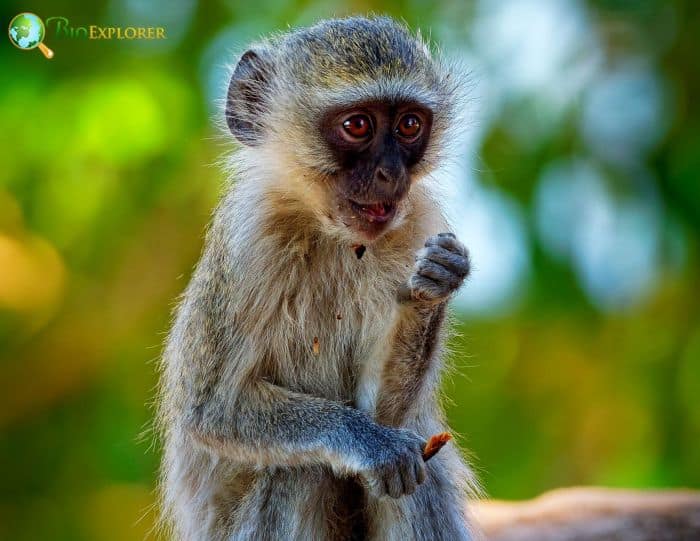
- The species is sometimes classified as a subspecies of the Green monkey (Chlorocebus pygerythrus)or the common grivet (Chlorocebus aethiops).
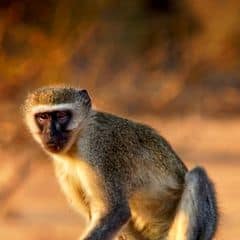
- These skinny monkeys have long limbs and long tails. Their bodies are covered in long, soft, wavy olive-gray fur. Their underside is white.
- Their black faces are framed by white fur on their cheeks and eyebrows. They have thin, sloping nostrils and thin lips.
- Their eyes are warm brown, and their chest is white. Males are easy to distinguish as they have light blue and red genitalia.
- They also have whiskers around their ears. Their feet are dark in color. The tip of the tail is black, while the underside is gray, with some red at the base.
Malbrouck Facts
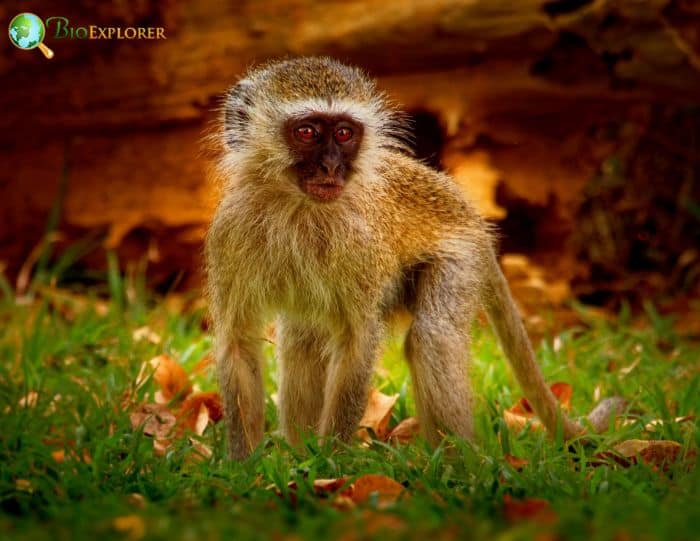
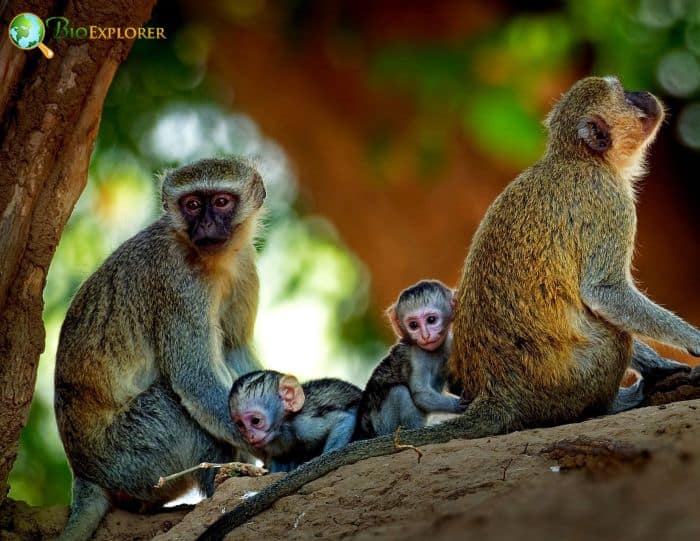
- They live in groups of several males and females, averaging up to 50 individuals, with as many adult males as adult females.
- Males leave their natal group when they mature, sometimes joining groups their male siblings have already joined.
- Meetings between groups can be friendly, but when conflicts arise, all group members (except the youngest) join the fight.
- The Malbroucks rise at dawn, and the group move on foot to different feeding places in wide open spaces.
- Avoiding eye contact is a way of indicating that one person is submissive to another.
Suggested Reading: Pictures of Different Types of Monkeys
Cite this page
BioExplorer. (2026, August 26). Malbrouck. https://www.bioexplorer.net/animals/mammals/monkeys/malbrouck/