
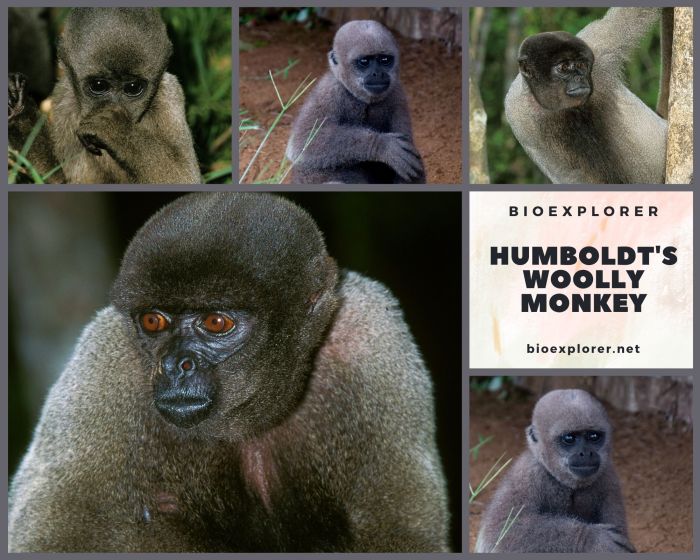
Humboldt’s Woolly Monkey
| Kingdom | Order | Family | Genus | Species |
|---|---|---|---|---|
| Animalia | Primates | Atelidae | Lagothrix | Lagothrix lagothricha |
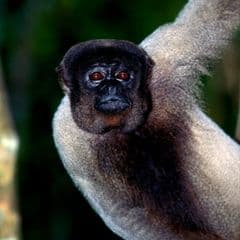
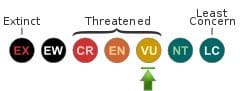
- Common Names: Humboldt’s Woolly Monkey, Brown Woolly Monkey, and Common Woolly Monkey
- Taxonomy Classification Year: 1812
- Monkey Size: 55.8 to 68.6 cm (21.97 to 27.01 in)
- Skin Color(s): Gray, black, and brown
- Habitat: Forest, rainforest, mountains
- Diet: Omnivorous
- Native Countries: Colombia, Ecuador, Peru, Bolivia, Brazil, Venezuela

Humboldt’s Woolly Monkey Distribution
Countries
Colombia ( )
)
)
Ecuador ( )
)
)
Peru ( )
)
)
Bolivia ( )
)
)
Brazil ( )
)
)
Venezuela ( )
)
)Humboldt’s Woolly Monkey Characteristics
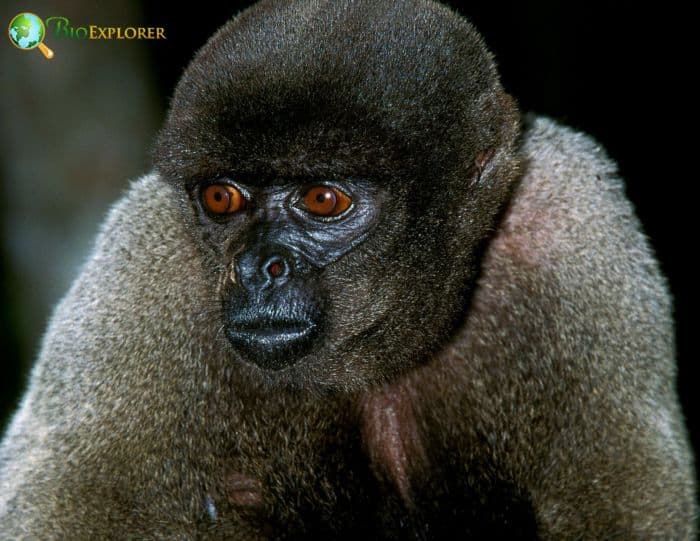
Humboldt’s woolly monkey[1], common woolly monkey, or brown woolly monkey (Lagothrix lagothricha) is a woolly monkey endemic to Venezuela, Brazil, Ecuador, Bolivia, Peru, and Colombia.
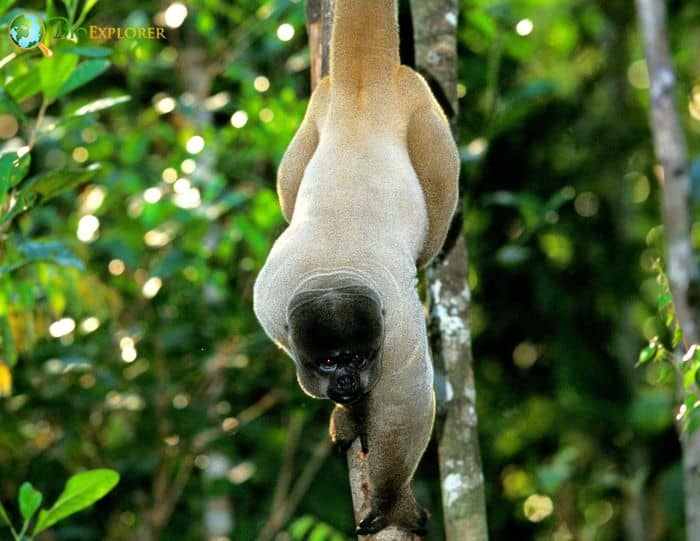
- Humboldt’s woolly monkeys are large, stocky animals and are among the largest New World Monkeys by weight.
- The length of the head and body varies from 55.8 to 68.6 cm, and the prehensile tail from 60 to 72 mm.
- The coat is short, dense, coarse, and consists mainly of an undercoat. Color varies widely, with upper parts being pale smoky brown, dark brown, dark gray, pale gray, russet, or olive.
- In some of Humboldt’s woolly monkeys, the color of the head and limbs is noticeably darker than the back; in others, the color is uniform.
- The underside is usually a little paler than the rest of the body.
What Do Humboldt’s Woolly Monkeys Eat?
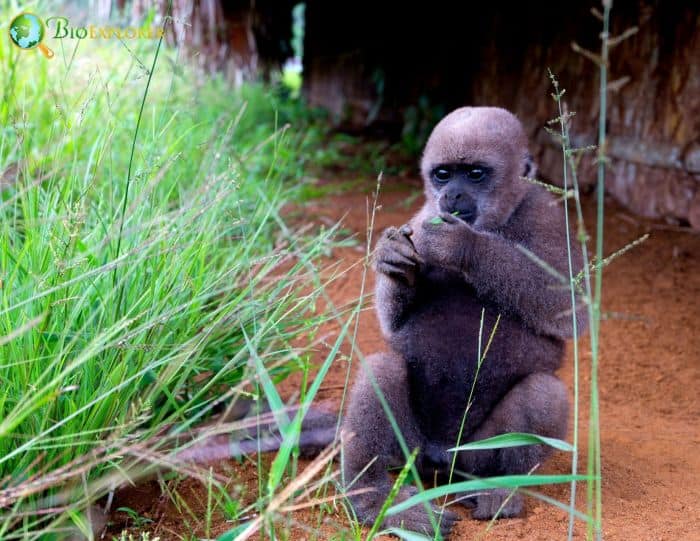
The Humboldt’s Woolly Monkey nourishes on many plant matters including[¶]:
- Matchwood (Schefflera morototoni)
- Black Manwood (Minquartia guianensis).
- Pachiuba (Socratea exorrhiza)
- Seasonvine (Cissus verticillata)
- Scarlet Passionflower (Passiflora coccinea).
- Bara (Guatteria longicuspis)
- Poroto Shimbillo (Inga brachyrhachis).
- Maraximbé (Trichilia tuberculata)
- Chalahuite (Inga acrocephala)
- Cuero De Rana (Laetia procera).
- Hogplum (Spondias mombin)
- American Muskwood (Guarea guidonia).
- Guiana Brosimum (Brosimum guianense).
- Rabo De Ranton (Casearia aculeata).
- Guamo (Inga acreana)
- Figueira-Acreana (Ficus sphenophylla)
- Pacae Colorado (Inga alba).
- Trichilia (Trichilia)
- Icecreambean (Inga edulis)
- Hinchahuevos (Sapium laurifolium)
- Amarillo (Guatteria punctata)
- Breadnut (Brosimum alicastrum)
- Abiu (Pouteria caimito)
- Sweetwood (Nectandra membranacea)
- Caucho Rubber (Castilla ulei).
- Fig (Ficus)
Humboldt’s Woolly Monkey Facts
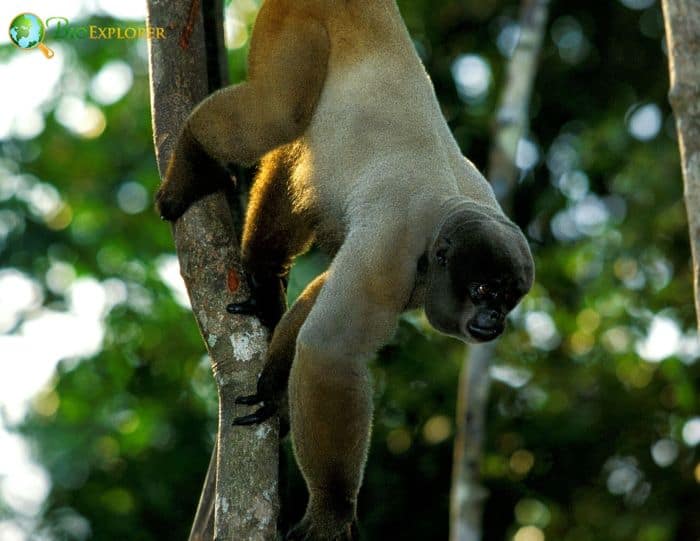
- Humboldt’s woolly monkeys live in groups of 2 to 70 individuals, usually splitting the group into smaller subgroups when active.
- Juveniles in a group play amongst themselves around noon and have their own games.
- Males threaten other males by shaking branches, defecating, and barking loudly.
- Humboldt’s woolly monkeys can show subtle mood swings and intentions with various facial expressions.
- They have been observed rubbing their chests in their natural habitat, and in captivity, it has been observed mainly in dominant male species moving to a new territory.
Suggested Reading: Different Monkey Species
Cite this page
BioExplorer. (2026, August 26). Humboldt’s Woolly Monkey. https://www.bioexplorer.net/animals/mammals/monkeys/humboldts-woolly-monkey/