
Guinea Baboon
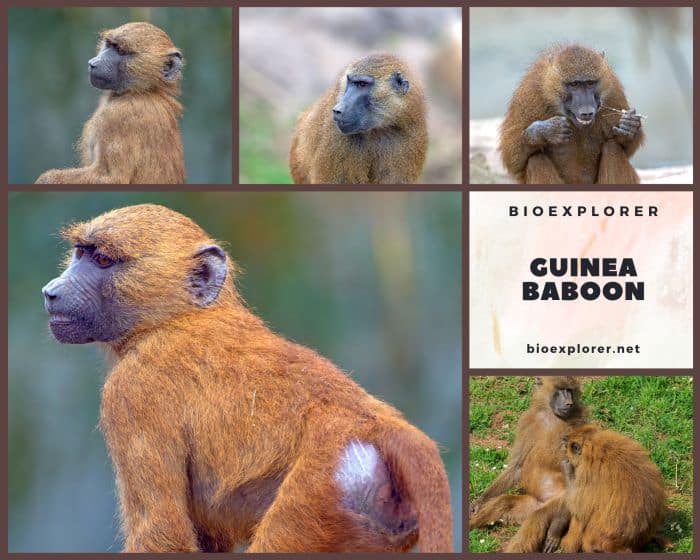
Primate Profile
Guinea Baboon
Papio Papio papio
Kingdom
Animalia
Phylum
Chordata
Class
Mammalia
Order
Primates
Family
Cercopithecidae
Genus
Papio
Species
papio
Authority
(Desmarest, 1820)
Photo
NT
IUCN STATUSNear Threatened
- Common NameGuinea Baboon
- Taxonomy Classification Year1820
- Monkey Size50.8 to 114.3 mm (20.00 to 45.00 in)
- Skin Color(s)Reddish-brown
- HabitatSavanna or grassland, forest, rainforest
- DietOmnivorous
- Native CountriesGuinea, Senegal, Gambia, Mauritania, Mali
Guinea Baboon Distribution
Countries
Guinea ( )
)
)
Senegal ( )
)
)
Gambia ( )
)
)
Mauritania ( )
)
)
Mali ( )
)
)Guinea Baboon Characteristics
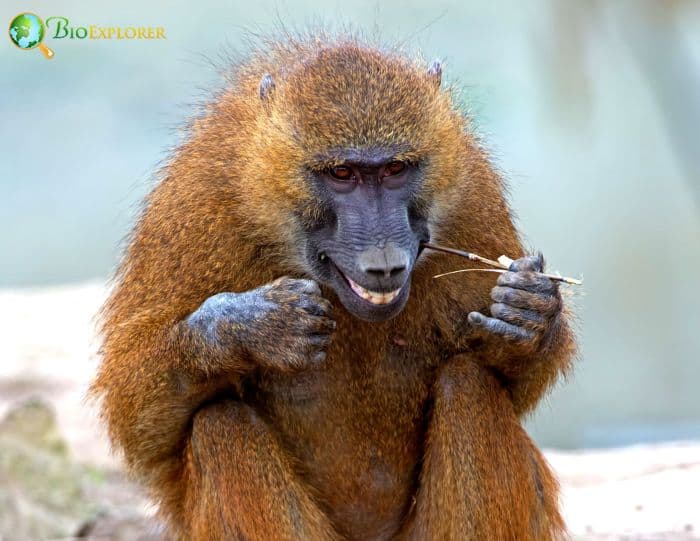
The Guinea baboon[1] (Papio papio) is a baboon of the Old World monkey family.
- Some (older) classifications only list two species of the Papio genus, this one and the Hamadryas baboon.
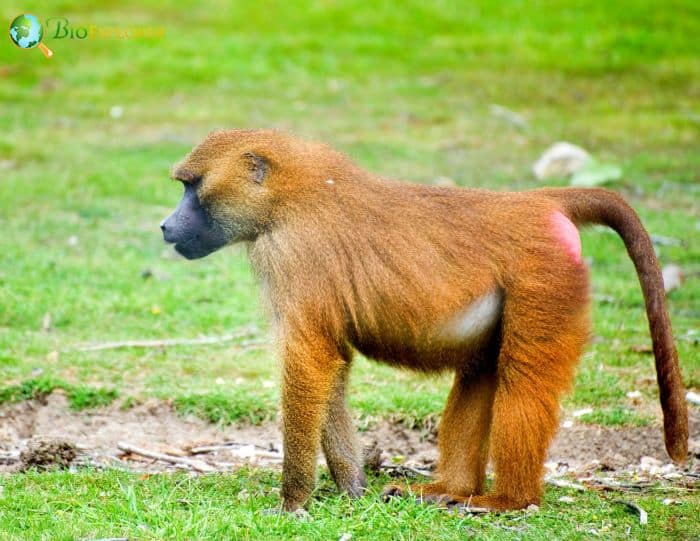
- The fur of Papio papio is reddish-brown in color with a considerable geographic variation.
- Those individuals from the western part of the range are lighter and conspicuously red than those from the eastern part, where the individuals are darker and more tan.
- Unlike many other baboon species, the Guinea baboon characteristically displays the same coat color on the cheeks, back, arms, and abdomen.
- Individual hairs have multiple color bands and a wavy texture. The skin on the face of this species is purplish-black.
- The moderate amount of visible hairless skin around the anal area in males is pink in color.
- Female anogenital skin changes color based on reproductive status and age.
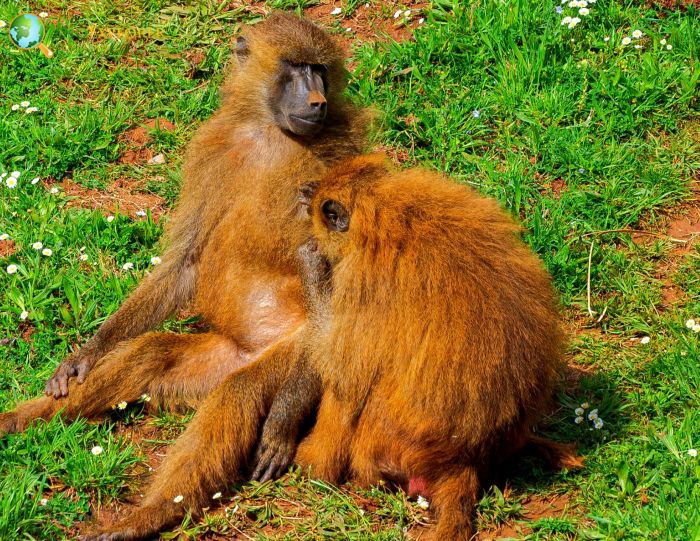
Guinea Baboon Facts
- When walking, these baboons support their weight on the bottom of their toes in front and on the entire sole of their feet.
- The social structure of Guinea baboons is apparently complex, similar to that of Hamadryas baboons.
- Resting sites are significant limiting factors in the dispersal and movement of baboons. Consequently, Guinea baboons mainly sleep in large kapok trees or palm trees.
- Unlike Chacma baboons (P. ursinus), which often sleep in burrows, Papio papio appears to enter burrows to lick the walls. This geophagy may be a means for animals to obtain essential salts.
- Among the vocalizations of Guinea, baboons are several loud calls that can be heard over great distances and quieter calls that are typically used in more intimate settings.
Suggested Reading: All Different Types of Monkeys
Cite this page
BioExplorer. (2026, September 24). Guinea Baboon. https://www.bioexplorer.net/animals/mammals/monkeys/guinea-baboon/