Golden Lion Tamarin

Golden Lion Tamarin

KingdomOrderFamilyGenusSpecies
AnimaliaPrimatesCallitrichidaeLeontopithecusLeontopithecus rosalia

Golden Lion Tamarin
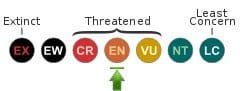
IUCN Status: Endangered
  • Common Name: Golden Lion Tamarin
  • Taxonomy Classification Year: 1766
  • Monkey Size: 20 to 36.6 cm long (8 to 13in)
  • Skin Color(s): Bright orange
  • Habitat: Rainforest
  • Diet: Omnivorous
  • Native Countries: Brazil

Golden Lion Tamarin Distribution

Author: Al MacDonald Editor: Fritz Lekschas License: CC BY-SA 3.0 ID: ISO 3166-1 or "_[a-zA-Z]" if an ISO code is not available United Arab Emirates Afghanistan Albania Armenia Angola Argentina Austria Australia Azerbaijan Bosnia and Herzegovina Bangladesh Belgium Burkina Faso Bulgaria Burundi Benin Brunei Darussalam Bolivia (Plurinational State of) Brazil Bahamas Bhutan Botswana Belarus Belize Canada Democratic Republic of Congo Central African Republic Congo Switzerland Côte d'Ivoire Chile Cameroon China Colombia Costa Rica Cuba Cabo Verde Cyprus Czechia Germany Denmark Djibouti Dominica Dominican Republic Algeria Ecuador Estonia Egypt Eritrea Spain Ethiopia Finland Falkland Islands (Malvinas) France Gabon United Kingdom of Great Britain and Northern Ireland Georgia Ghana Greenland Gambia Guinea Equatorial Guinea Greece Guatemala Guinea-Bissau Guyana Honduras Croatia Haiti Hungary Indonesia Ireland Israel India Iraq Iran (Islamic Republic of) Iceland Italy Jamaica Jordan Japan Kenya Kyrgyzstan Cambodia Comoros Korea (Democratic People's Republic of) Korea, Republic of Kuwait Kazakhstan Lao People's Democratic Republic Lebanon Saint Lucia Sri Lanka Liberia Lesotho Lithuania Luxembourg Latvia Libya Morocco Moldova, Republic of Montenegro Madagascar North Macedonia Mali Myanmar Mongolia Mauritania Malta Mauritius Maldives Malawi Mexico Malaysia Mozambique Namibia New Caledonia Niger Nigeria Nicaragua Netherlands Norway Nepal New Zealand Oman Panama Peru Papua New Guinea Philippines Pakistan Poland Puerto Rico Portugal Paraguay Qatar Romania Serbia Russian Federation Rwanda Saudi Arabia Solomon Islands Seychelles Sudan Sweden Singapore Slovenia Slovakia Sierra Leone Senegal Somalia Suriname South Sudan Sao Tome and Principe El Salvador Syrian Arab Republic Eswatini Chad Togo Thailand Tajikistan Turkmenistan Tunisia Turkey Trinidad and Tobago Taiwan, Province of China Tanzania, United Republic of Ukraine Uganda United States of America Uruguay Uzbekistan Saint Vincent and the Grenadines Venezuela (Bolivarian Republic of) Viet Nam Vanuatu Yemen South Africa Zambia Zimbabwe
Countries
Brazil

Golden Lion Tamarin Characteristics

Golden Lion Tamarin

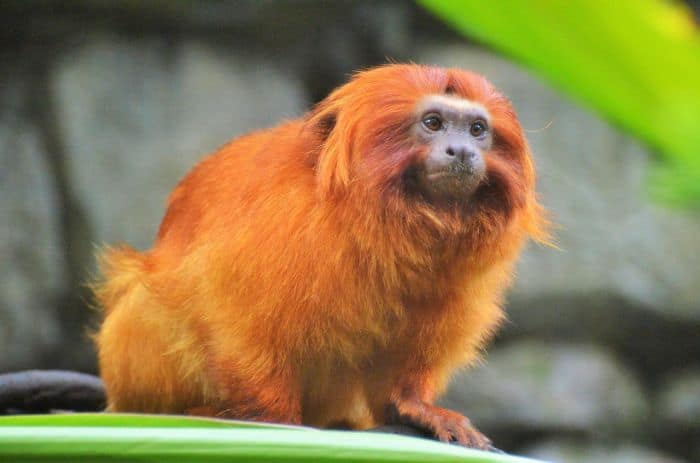
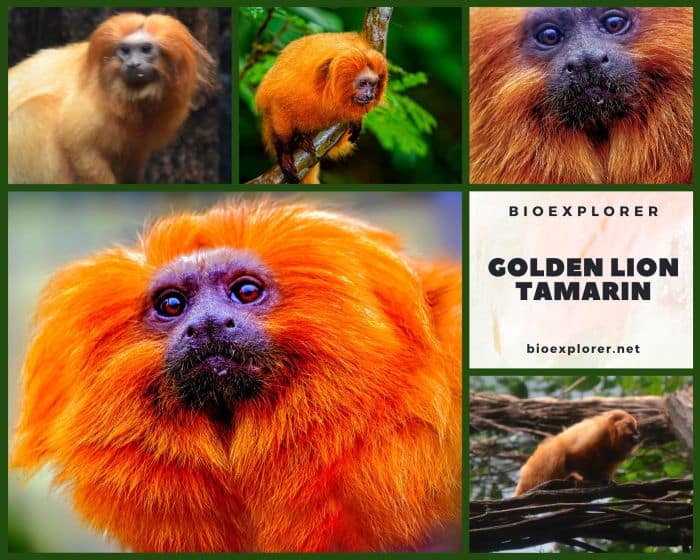
The golden lion tamarin[1] (Leontopithecus rosalia), also called the golden tamarin, is a small New World primate in the Callitrichidae family.

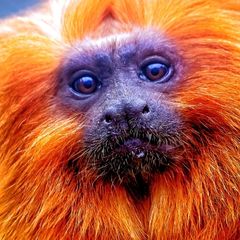
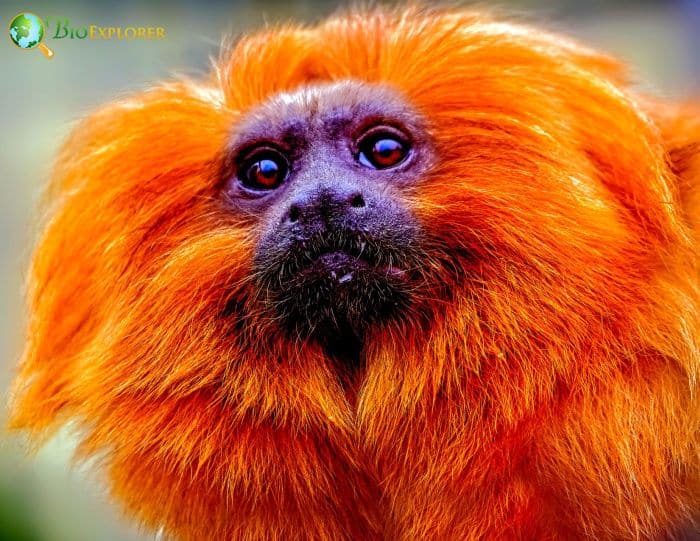
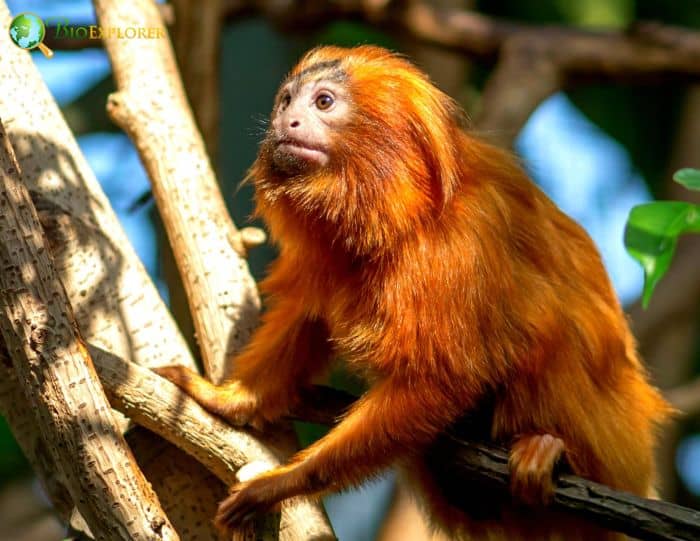
  • They have small round heads adorned with a thick golden mane on the crown, cheeks, ears, throat, and shoulders.
  • Their hairless faces are flat with widely spaced nostrils. Their bodies are draped in long, soft, silky fur ranging in color from pale gold to rich red gold.
  • An interesting feature is that these monkeys have claws, not flattened nails.
  • The golden lion tamarin is 200 to 366 mm (8 to 13 in) long with a tail length of 315 to 400 mm (12 to 15 in).
  • There is no sexual dimorphism in Golden lion tamarins.
Golden lion tamarin

What Do Golden Lion Tamarins Eat?

What Do Golden Lion Tamarins Eat?

Being omnivorous, the Golden Lion Tamarin diet includes but not limited to[¶]:

  • Ambay Pumpwood (Cecropia pachystachya).
  • Pois Doux (Inga thibaudiana).
  • Icecream bean (Inga edulis).
  • Johnny berry (miconia)
  • Wild Balata (Micropholis guyanensis).
  • Forest Snakevine (Hyperbaena domingensis).
  • Punchberry (Myrcia splendens)

Golden Lion Tamarin Facts

Golden Lion Tamarin

  • The golden lion tamarin derives its name from its vivid reddish-orange coat and extra-long hair around its face and ears, giving it a distinctive mane.
  • Like most New World Monkeys, the golden lion tamarin has tegulae, claw-like nails, rather than the flat nails or ungulate found in other primates, including humans.
  • By moving their sleeping nests around frequently, groups reduce the scent they leave behind and minimize the chances of predators finding them.
  • Groups of these tamarin species use hollow tree cavities, thick tendrils, or epiphytes as roosting places.
  • The golden lion tamarin tends to be active earlier during the hotter and wetter seasons and retire later as the days are longer.

Suggested Reading: All Types of Monkeys

Cite this page

Bio Explorer. (2026, January 3). Golden Lion Tamarin. https://www.bioexplorer.net/animals/mammals/monkeys/golden-lion-tamarin/

Key References

  • [1]“Golden lion tamarin | Smithsonian’s National Zoo”. Accessed September 08, 2022. Link.
  • [¶] – Bello, C., Galetti, M., Montan, D., Pizo, M. A., Mariguela, T. C., Culot, L., Bufalo, F., Labecca, F., Pedrosa, F., Constantini, R., Emer, C., Silva, W. R., da Silva, F. R., Ovaskainen, O. and Jordano, P. (2017), Atlantic frugivory: a plant-frugivore interaction data set for the Atlantic Forest. Ecology, 98: 1729. doi:10.1002/ecy.1818. doi:10.1002/ecy.1818

Leave a Reply

Your email address will not be published. Required fields are marked *