
Bolivian Red Howler
| Kingdom | Order | Family | Genus | Species |
|---|---|---|---|---|
| Animalia | Primates | Atelidae | Alouatta | Alouatta sara |
- Common Name: Bolivian Red Howler
- Taxonomy Classification Year: 1910
- Monkey Size: 56.8 to 46.7 (18.4 to 22.4 in)
- Skin Color(s): Reddish-orange
- Habitat: Rainforest
- Diet: Herbivorous
- Native Countries: Bolivia, Brazil, Colombia, Ecuador, French Guiana, Guyana, Peru, Suriname, Trinidad and Tobago, Venezuela

Bolivian Red Howler Distribution
Countries
Bolivia ( )
)
)
Brazil ( )
)
)
Colombia ( )
)
)
Ecuador ( )
)
)
French Guiana ( )
)
)
Guyana ( )
)
)
Peru ( )
)
)
Suriname ( )
)
)
Trinidad and Tobago ( )
)
)
Venezuela ( )
)
)Bolivian Red Howler Characteristics
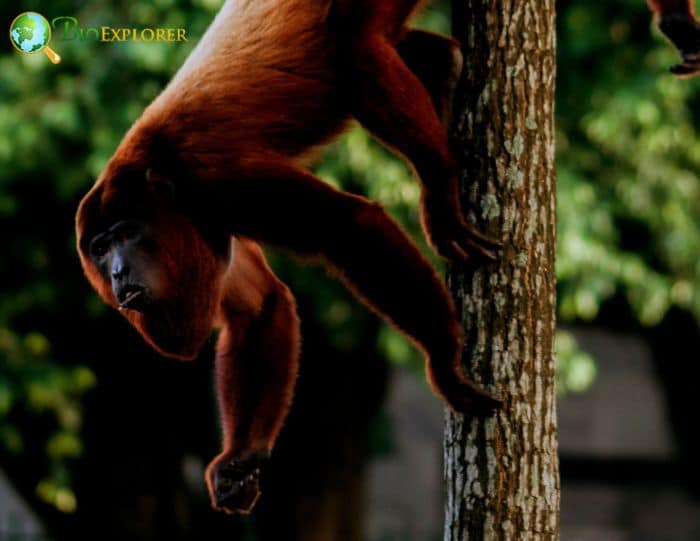
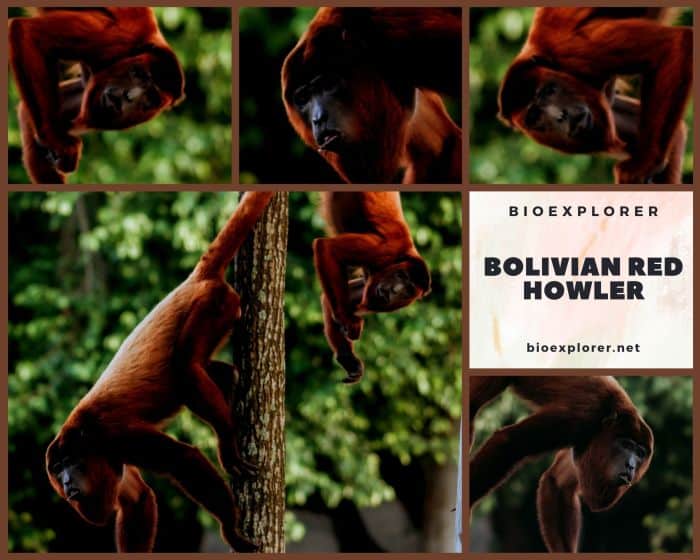
The Bolivian Red howler monkey[1] is a New-World monkey species native to neotropical South America.
- It is mainly found in tropical forests, including seasonally flooded and riparian forests.
- The adult Bolivian red howler monkey has a well-built body capable of reaching maximum body length.
- In addition, red howler monkeys have muscular prehensile tails that allow them to grab tree branches or swing from them.
- Males are between 20.6 and 22.4 inches tall and weigh between 13 and 17 pounds.
- Females are slightly smaller at only about 18.4 to 19.6 inches and 10 to 14 pounds. The legs and arms are extended. The hands are dexterous and robust. They are covered in red-orange fur.
Bolivian Red Howler Facts
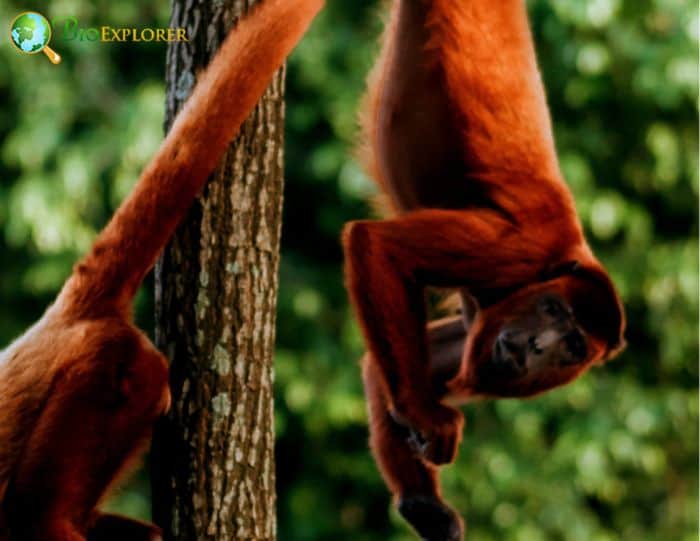
- The Bolivian red howlers live in groups of 1 to 3 males and 2 to 7 females. Males in bachelor groups try to dominate the female group by wrestling the lead male.
- Adult females in the group, particularly those with no infant, are very fond of other female infants and will kiss and play with them.
- The female Red Howler chases a male Howler and shows him her tongue. If the male is not interested, she will switch to another male.
- Newborns are born with a pelage and must be hung from the womb. However, by howler babies turn one month old, they can now be attached to their mother by their tails and eventually ride on her back when they are one year old.
- They are good swimmers, although they spend most of their time in the tree.
Suggested Reading: All Kinds of Monkeys
Cite this page
BioExplorer. (2026, August 26). Bolivian Red Howler. https://www.bioexplorer.net/animals/mammals/monkeys/bolivian-red-howler/