
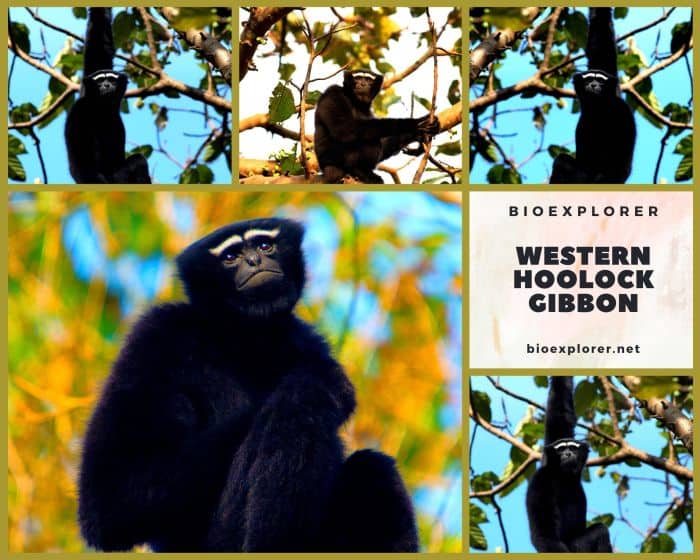
Western Hoolock Gibbon
| Kingdom | Order | Family | Genus | Species |
|---|---|---|---|---|
| Animalia | Primates | Hylobatidae | Hoolock | Hoolock hoolock |
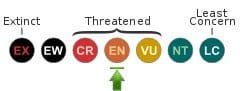
- Common Name: Western Hoolock Gibbon
- Taxonomy Classification Year: 1834
- Monkey Size: 60 to 90 cm (23.62 to 35.43 in)
- Skin Color(s): Black or dark brown
- Habitat: Forest, rainforest, scrub forest
- Diet: Omnivorous
- Native Countries: Bangladesh, India, Myanmar, China

Western Hoolock Gibbon Distribution
Countries
Bangladesh ( )
)
)
India ( )
)
)
Myanmar ( )
)
)
China ( )
)
)Western Hoolock Gibbon Characteristics
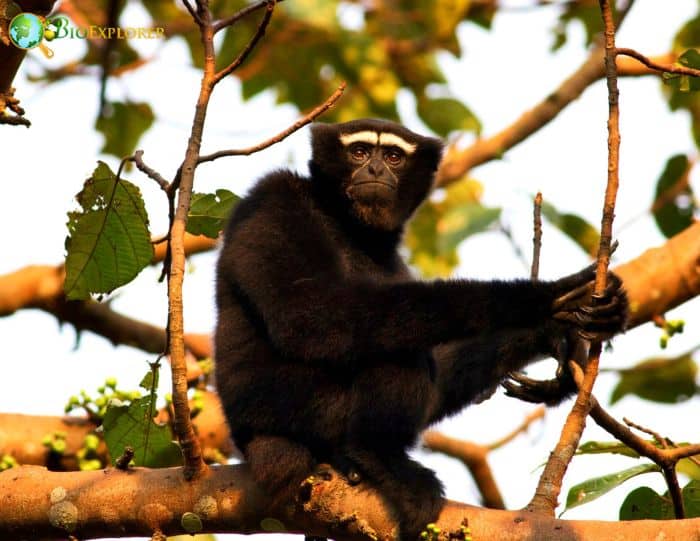
The Western Hoolock gibbons[1] are three species of primates in the Hoolock genus of the gibbon family, Hylobatidae, endemic to Myanmar, eastern Bangladesh, northeastern India, and southwestern China.
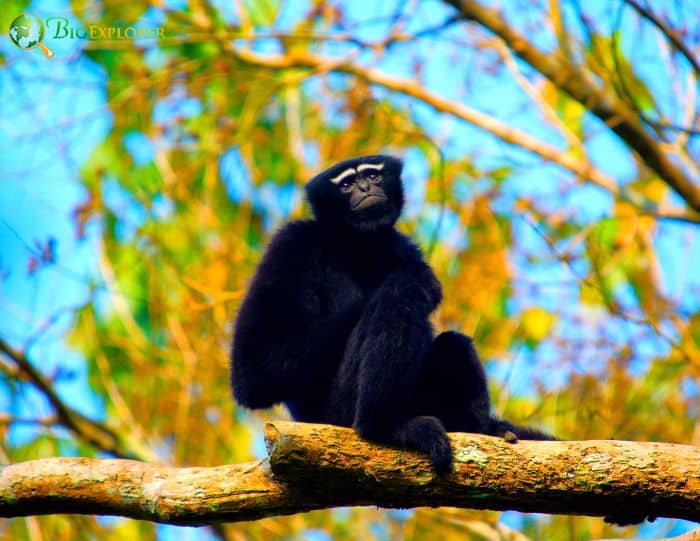
- Hoolock gibbons are the second largest gibbon after the siamangs. They weigh between 6 and 8 kg.
- Hoolock gibbons are characterized by longer hair, curved white eyebrow bands, and a slightly triangular head.
- This species is bicolor: adult males are entirely black, while adult females are dark brown with black on the neck, chest, and face. In some subpopulations, males have more pronounced eyebrows than in others.
- Males may also have a white foreskin tuft and may show white on the chin and cheeks. Some females have lighter fur on their hands and feet.
- Hoolock gibbon is unique among gibbon species in having only 38 chromosomes compared to 44 for other members of its subgenus.
Western Hoolock Gibbon Facts
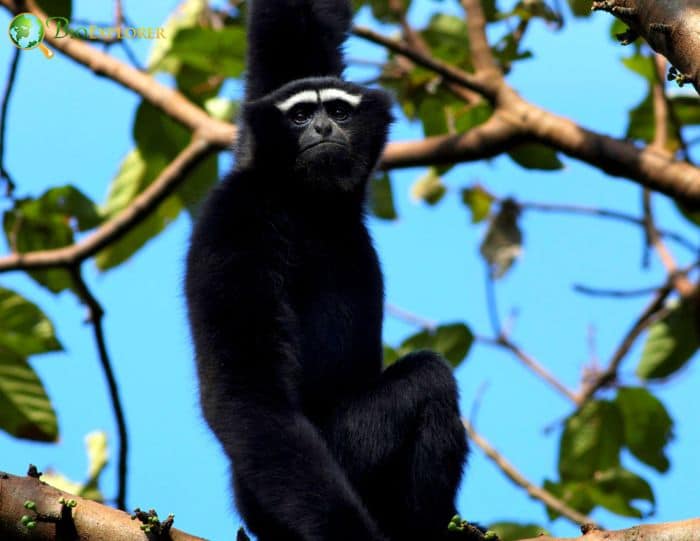
- Like other gibbons, Western Hoolock gibbons are diurnal and arboreal, gliding through trees with their long arms.
- The pair, with its offspring (usually one or two), inhabit a stable and heavily defended territory.
- Sometimes solitary adults, usually subadults recently expelled from their family group, establish solitary territories.
- Their calls are used to locate family members and keep other gibbons out of their territory.
- Unlike other gibbon species, male and female hoolock gibbon vocalizations are the same and relatively simple.
Suggested Reading: Family of Apes
Cite this page
BioExplorer. (2026, September 30). Western Hoolock Gibbon. https://www.bioexplorer.net/animals/mammals/apes/western-hoolock-gibbon/
One of the most impressive aspects of the Western Hoolock Gibbon is their strong family bonds. They form monogamous pairs and engage in long-lasting relationships, working together to raise their offspring. Witnessing their nurturing behavior and the adorable interactions within their family groups is heartwarming.
At Lawachara reserve forest has the largest population of Western Hoolock Gibbon in Bangladesh. Check out more at here https://nijhoom.com/lawachara-national-park/