
Siamang Gibbon
| Kingdom | Order | Family | Genus | Species |
|---|---|---|---|---|
| Animalia | Primates | Hylobatidae | Symphalangus | Symphalangus syndactylus |

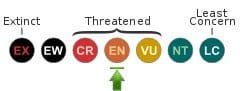
- Common Name: Siamang Gibbon
- Taxonomy Classification Year: 1821
- Monkey Size: 71 to 90 cm (27.95 to 35.43 in)
- Skin Color(s): Dark black
- Habitat: Forest, rainforest
- Diet: Omnivorous
- Native Countries: Indonesia, Malaysia, Thailand

Siamang Distribution
Countries
Indonesia ( )
)
)
Malaysia ( )
)
)
Thailand ( )
)
)Siamang Gibbon Characteristics
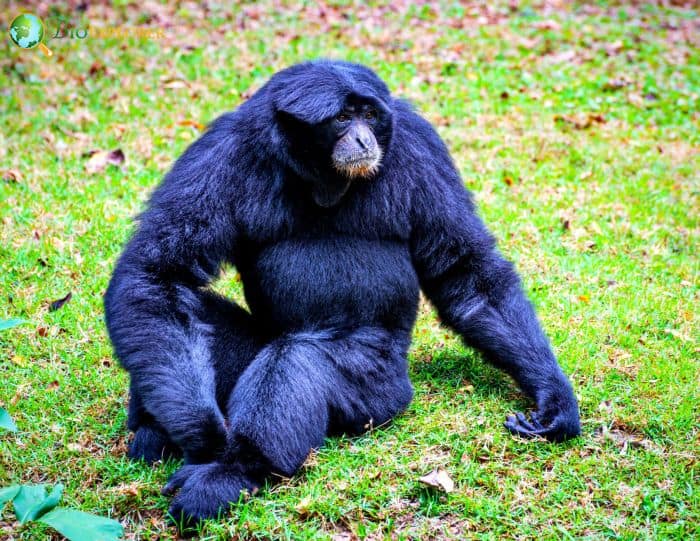
The siamang[1] gibbon (Symphalangus syndactylus) is a black-coated arboreal gibbon endemic to the forests of Thailand, Malaysia, and Indonesia. It is the only species in the genus Symphalangus.
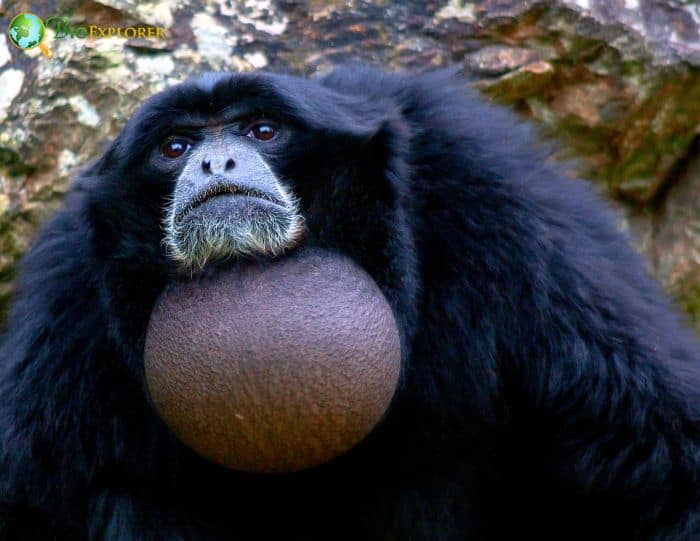
All siamang gibbons can be distinguished from other gibbons in two ways:
- A bare throat sac (also called a gular sac) can expand to the size of a siamang head when inflated before telephoning.
- Straps between the second and third toes, the usefulness of which is not yet known. This strap gives the siamang its scientific name, Symphalangus syndactylus, which translates from ancient Greek as “joined phalanx” + “joined finger“.
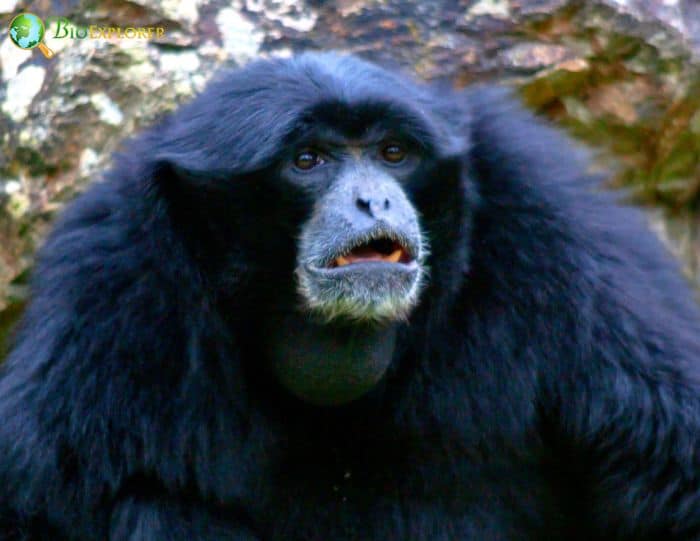
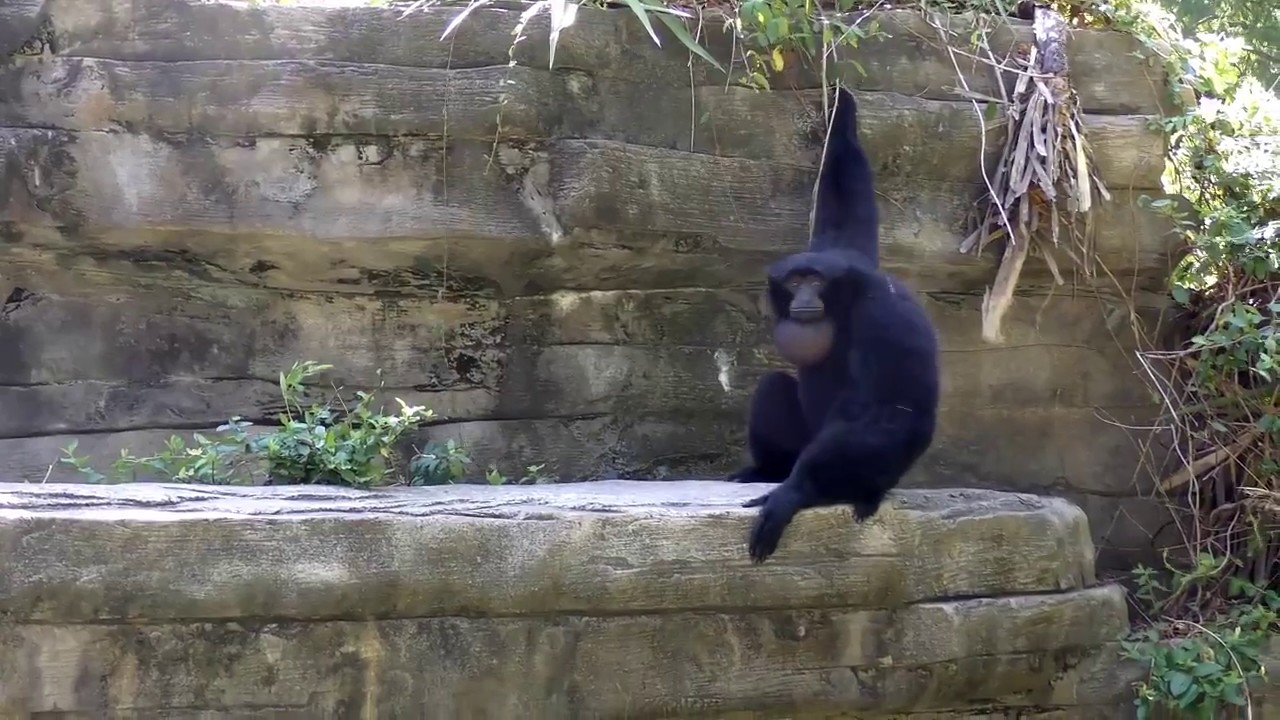
The siamang’s body is perfectly adapted to a life of swinging from branch to branch (also called brachiation).
- As with other gibbons, its arms are incredibly long, with a wingspan sometimes twice its body length.
- To get a better grip on branches, Siamang thumbs are shorter and lower on the hand, so they don’t get in the way.
- This trait can also be seen in the hands of orangutans, spider monkeys, and other gibbons.
- Siamangs have dark black fur and gray or reddish hair scattered around their bare face. Its fur is relatively shaggy compared to other gibbons.
Siamang Gibbon Facts
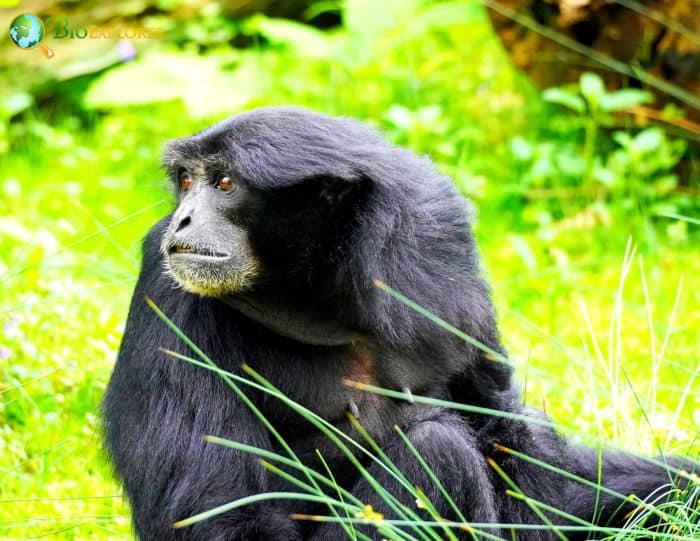
- Siamangs are diurnal, waking at dawn and retiring with their family to the highest branches of a single tree at dusk, where they sleep at night.
- They live in small groups of 3-6 individuals. The family consists of a monogamous pair of adult siamangs and their young who have not yet left the family.
- Calls are generally used to establish territory, but mating pairs may sing together to strengthen their bond.
- Almost all siamangs are monogamous, with a breeding pair producing one newborn every 2 to 3 years.
- Siamangs have no known natural predators thanks to their size, maneuverability, and secure position in trees.
Suggested Reading: List of Apes
Cite this page
BioExplorer. (2026, August 26). Siamang Gibbon. https://www.bioexplorer.net/animals/mammals/apes/siamang-gibbon/