
Puerto Rican Emerald
| Kingdom | Order | Family | Genus | Species |
|---|---|---|---|---|
| Animalia | Apodiformes | Trochilidae | Riccordia | Riccordia maugaeus |
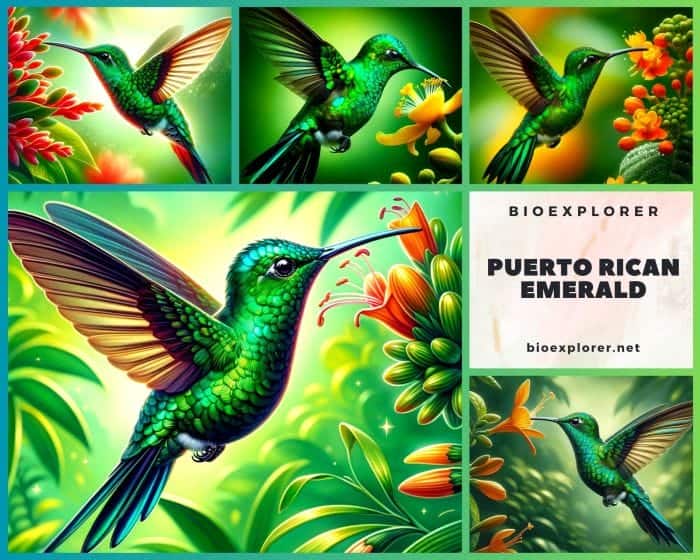
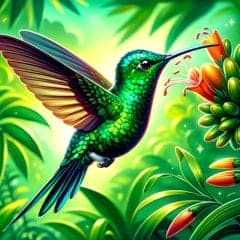
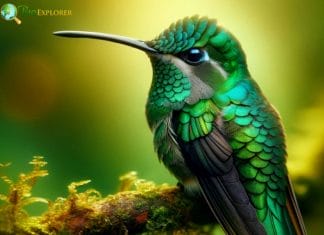
The vibrant Puerto Rican Emerald (Riccordia maugaeus) is a diminutive hummingbird species endemic to its namesake island. Males of this abundant generalist reach just 3.3-3.7 inches long, with metallic emerald heads and shiny grass-green bodies offset by steely blue forked tails.
- Common Name(s): Puerto Rican Emerald
- Family: Trochilidae
- Body Dimensions: 8.5-9.5 cm
- Male Plumage Color(s): Iridescent Green Crown, Bluish Green Gorget, Green Underparts, Steely Blue Forked Tail
- Female Plumage Color(s): Dull Green Crown, Light Gray Throat, Green Underparts, Forked Tail With Pale Markings
- Habitat: Forests, Woodlands, Gardens
- Diet: Nectar, Arthropods
- Native Countries: Puerto Rico
- Continent(s): North America
- Taxonomy Classification Year: 1801
- Taxonomist(s): Jean Baptiste Audebert & Louis Pierre Vieillot

Puerto Rican Emerald Fun Facts
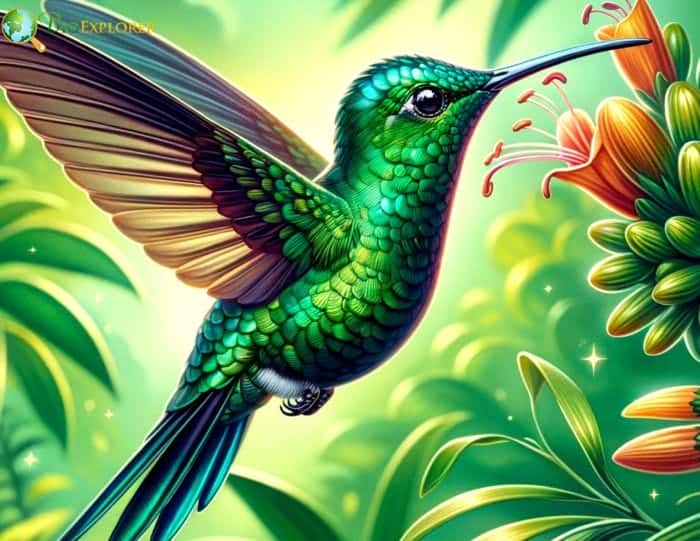
- Females lack iridescence, sporting gray throats and brown-marked green tails instead.
- Weighing only 0.12-0.13 ounces, the Puerto Rican Emerald inhabits virtually every forest and human-modified landscape across Puerto Rico, from the coastal lowlands to mountain forests[1].
- A sedentary species, the Puerto Rican Emerald feeds on nectar from diverse flowering trees and shrubs at all levels of the forest.
- Both sexes snatch small spiders and insects like flies, bees, and wasps to supplement their sugar-rich diet.
- Nesting peaks from February to May. Tiny cups of plant fibers and soft lining materials are anchored in low branches and camouflaged with lichen.
- The typical clutch size is just two eggs, incubating for 14-16 days while the chicks fledge at 3 weeks old.
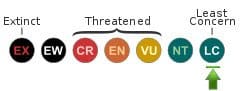
- Abundant, adaptable, and occupying an array of habitats, the diminutive Puerto Rican Emerald is currently classified as Least Concern by the IUCN Red List, although its population numbers are uncertain.
Suggested Reading:
Green Mango
This hummingbird readily utilizes gardens, parks, plantations, and other human-modified landscape features offering nectar plants. Still, protecting its native forest nesting and foraging grounds remains prudent to sustain this emerald jewel as an integral pollinator across Puerto Rico’s ecological mosaic.
Cite this page
Bio Explorer. (2026, January 28). Puerto Rican Emerald. https://www.bioexplorer.net/animals/birds/puerto-rican-emerald/