
Pale-Thighed Langur
| Kingdom | Order | Family | Genus | Species |
|---|---|---|---|---|
| Animalia | Primates | Cercopithecidae | Presbytis | Presbytis siamensis |
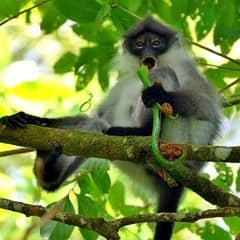
- Common Name: Pale-thighed Langur
- Taxonomy Classification Year: 1841
- Monkey Size: 41 to 69 cm (16.14 to 27.17 in)
- Skin Color(s): Brownish-gray
- Habitat: Forest, rainforest
- Diet: Herbivorous
- Native Countries: Malaysia, Thailand

Pale-thighed Langur Distribution
Countries
Malaysia ( )
)
)
Thailand ( )
)
)Pale-Thighed Langur Characteristics
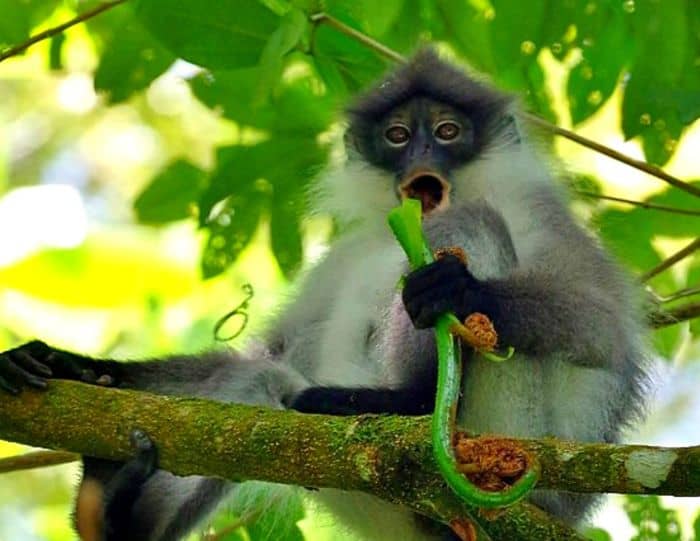
The pale-thighed surili[1] (Presbytis siamensis), also called the white-thighed langur, is a primate species in the Old World monkey family (Cercopithecidae).
- This species lives arboreal in submontane forests. It is endemic to the Thai-Malay Peninsula, Sumatra, and the Riau Archipelago.
- This slender little monkey is so cute! Coppery eyes peer coyly from beneath a plump brown or gray cap that nestles in a triangular formation around the nondescript brow ridge.
- Mother Nature outlined the skin around the eyes in pale pink and used the same color scheme to outline the monkey’s lower lip, adding more contrast to the dark skin of the face.
- She then endowed this surili with a long aquiline nose and wisely delineated them with modest nostrils. The overall effect is an expressive and seductive face.
- The species gets its name from the pale (or white) fur outside its thighs.
- The belly is also covered in white fur, and long white fur billows out from the face, almost obscuring the monkey’s dark snail ears.
- Long, brownish-gray fur covers the arms, back, lower legs, and tail, contrasting with the abundance of white fur. The hands and feet are black.
What Do Pale-thighed Langurs Eat?
Being an heavy herbivore, the Pale-thighed Langur mainly consumes Monkey Jack (Artocarpus rigidus)[¶].
Pale-Thighed Langur Facts
- Pale-thighed Surilis are savvy herbivores; it’s fun to say they only eat plants and have a fussy palate, with a preference for young leaves, seeds, and fruits.
- These adorable monkeys are active during the day (making them diurnal) and spend most of their time in the trees (making them arboreal).
- Small family groups (or troops) consisting of one male and several females are the norm for the species. A typical family group consists of one adult male and 2 to 4 adult females and their offspring.
- Pale-thighed surilis are territorial and always on the lookout for predators.
- The langurs, and therefore the surilis, are “chatterboxes“. Wildlife biologists have noted the “chatter” that can be heard in the trees above when these primates converse with each other.
Suggested Reading: Different Types of Monkeys and apes
Cite this page
BioExplorer. (2026, August 26). Pale-Thighed Langur. https://www.bioexplorer.net/animals/mammals/monkeys/pale-thighed-langur/