
Central American Squirrel Monkey
| Kingdom | Order | Family | Genus | Species |
|---|---|---|---|---|
| Animalia | Primates | Cebidae | Saimiri | Saimiri oerstedii |
- Common Name: Central American Squirrel Monkey
- Taxonomy Classification Year: 1872
- Monkey Size: 22.5 to 29.5 cm (8.86 to 11.61 in)
- Skin Color(s): Yellow brown
- Habitat: Forest, rainforest
- Diet: Omnivorous
- Native Countries: Costa Rica, Panama

Central American Squirrel Monkey Distribution
Countries
Costa Rica ( )
)
)
Panama ( )
)
)Central American Squirrel Monkey Characteristics
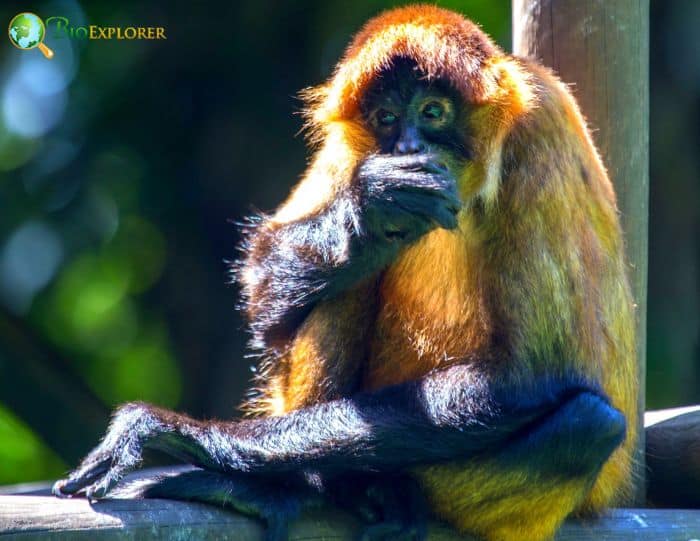
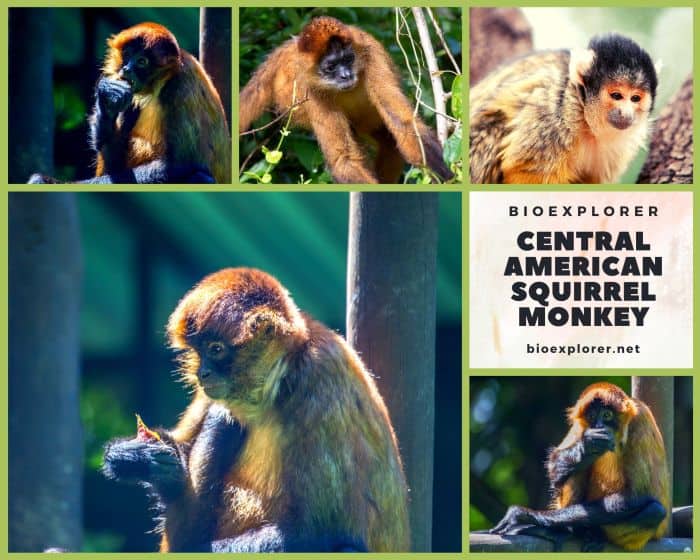
The Central American squirrel monkey[1] also called the red-backed squirrel monkey, a species of New-World monkey, is a squirrel monkey type native to the Pacific coast of Panama and Costa Rica.
- Central American squirrel monkeys are slender and petite with long tails. Much of the body fur and the forearms, hands, and feet are yellowish-brown.
- Their belly is light yellow. As their alternate common name, the red-backed squirrel monkey, suggests, they have golden red fur on their backs.
- The shoulders and hips are gray-brown, and the tail is also grey-brown but with a black tip.
- Central American squirrel monkeys can be distinguished from the South American squirrel monkey by the crown on their heads.
- Central American squirrel monkeys have black fur on their crowns, while South American squirrel monkeys have brownish-gray crowns.
What Do Central American Squirrel Monkeys Eat?
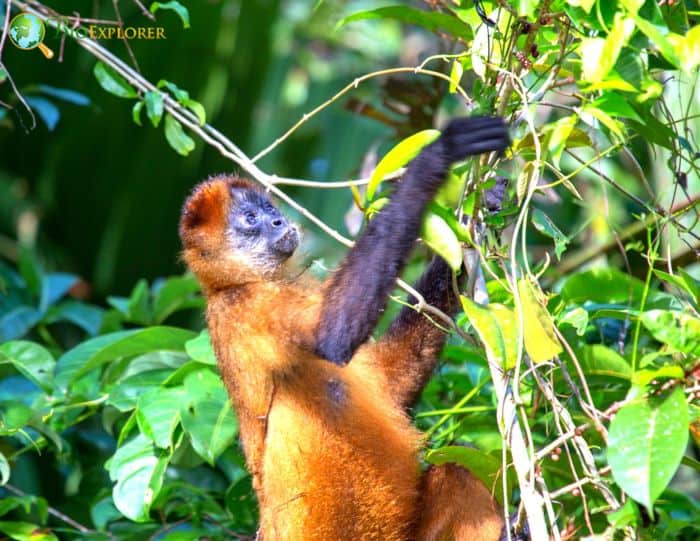
Being omnivorous, the Central American Squirrel Monkey consumes several food sources but is not limited to[¶]:
- Hexapoda (Insecta)
- Arthropodes (Arthropoda)
- Panama Hat Plant (Carludovica palmata).
- Abas (Psidium guajava)
- Amate (Ficus obtusifolia)
- Star Apple (Chrysophyllum cainito).
- Chirimoya (Annona spraguei)
- Malaysian Apple (Syzygium malaccense).
- Pumpwood (Cecropia peltata)
- Breadnut (Brosimum alicastrum)
- False Coffee (Faramea occidentalis).
- Icecreambean (Inga edulis)
- Jagua (Genipa americana)
- Pachiuba (Socratea exorrhiza)
- Guarumo (Cecropia obtusifolia)
- Conejo (Protium tenuifolium)
- Guabo Pachón (Inga goldmanii).
- Mango (Mangifera indica)
- Requia Colorada (Trichilia cipo).
- Smooth Manjack (Cordia laevigata).
- Guarumo Amarillo (Cecropia longipes).
- Angelica Tree (Dendropanax arboreus).
- Hogplum (Spondias mombin)
- Panama Tree (Sterculia apetala).
Central American Squirrel Monkey Facts
- Central American squirrel monkeys spend most of their lives in the middle and upper layers of the tree canopy.
- They have excellent eyesight and can distinguish colors. This allows them to identify the fruit in the dense vegetation.
- Due to the increase in agriculture and the squirrel monkeys’ shrinking territory, they often invade plantations.
- They start foraging just before sunrise and continue until an hour to an hour and a half after sunset, stopping only for short breaks or thunderstorms.
- In general, squirrel monkey family groups can be large, comprising up to 300 individuals. However, larger troops arise when two or smaller groups unite temporarily to feed, mate, or protect each other.
Suggested Reading: All Types of Monkeys
Cite this page
BioExplorer. (2026, September 29). Central American Squirrel Monkey. https://www.bioexplorer.net/animals/mammals/monkeys/central-american-squirrel-monkey/