
Black-footed Gray Langur
| Kingdom | Order | Family | Genus | Species |
|---|---|---|---|---|
| Animalia | Primates | Cercopithecidae | Semnopithecus | Semnopithecus hypoleucos |
- Common Name: Black-footed Gray Langur
- Taxonomy Classification Year: 1841
- Monkey Size: 65 to 75 cm (25 to 29 in)
- Skin Color(s): Brownish-gray
- Habitat: Rainforest
- Diet: Herbivorous
- Native Countries: India

Black-footed Gray Langur Distribution
Countries
India
Black-footed Gray Langur Characteristics
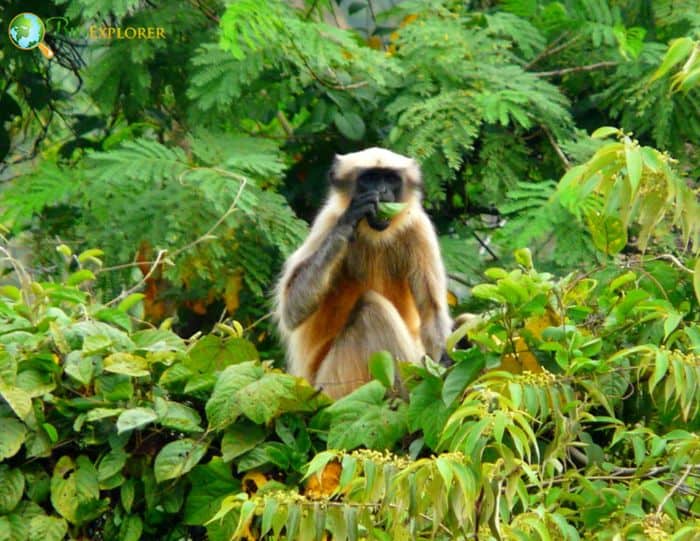
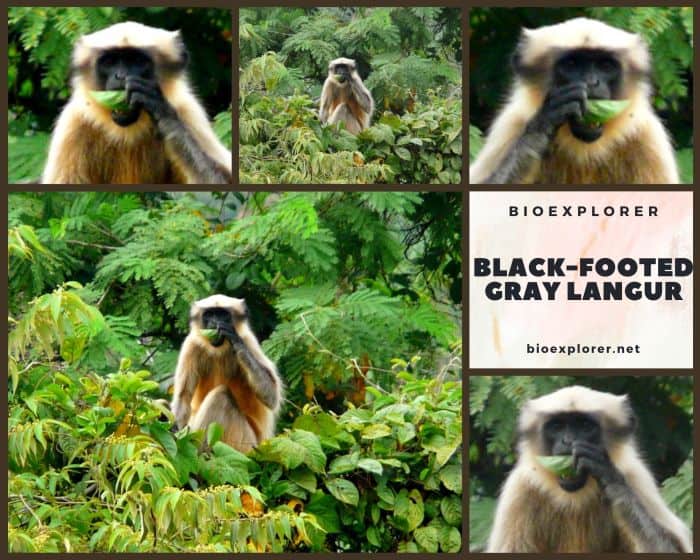
The black-footed gray langur[1] is an Old-World monkey, one of the langur species. Like other gray langurs, this species is a leaf-eating monkey in southern India.
- Black-footed gray langurs are slim, with long limbs and delicate facial features. They have black triangular faces.
- Their Hazelnut-colored eyes are large. Their nose forms a straight line down the center of the face, and the nostrils are vertical.
- The chin of these langurs is very small, and the lips form a horizontal line below their nose.
- The black hairs above the eyes point outwards. This appears as a brown band or streak across the eyes in some individuals, extending down the sides and into the ears.
- The face is surrounded by mustaches, and the chin ends in a tuft of hair that resembles a trim beard.
- The hair on the head, back, and limbs is yellowish-gray, while the abdomen is lighter, almost orange, in those living in increasingly humid areas.
- The inner thighs are light straw in color.
Black-footed Gray Langur Facts
- The black-footed gray langur is distributed throughout southwestern India (Kerala, Karnataka, and Goa) but is concentrated in the Western Ghats.
- The scientific name of this primate (hypoleucos) is derived from two Greek words: “hupo” meaning “under, ” and “leukos” meaning “white“.
- The tails of the species are described as having a “southern” pose, meaning they keep their tails curled away from their heads.
- Juvenile black-footed gray langurs develop their relationship-building, social, and motor skills by playing with each other.
- Body language and vocalizations allow these langurs to communicate with each other. For example, infants in distress usually shriek and squeak. Likewise, displaying adult males emit loud cries or cheers during altercations.
Suggested Reading: Various Species of Monkeys
Cite this page
Bio Explorer. (2026, March 21). Black-footed Gray Langur. https://www.bioexplorer.net/animals/mammals/monkeys/black-footed-gray-langur/