
Andean Saddle-back Tamarin
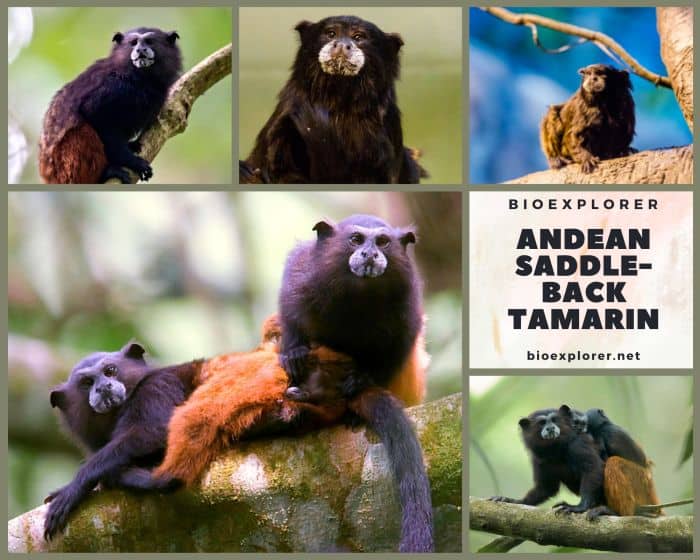
| Kingdom | Order | Family | Genus | Species |
|---|---|---|---|---|
| Animalia | Primates | Callitrichidae | Leontocebus | Leontocebus leucogenys |
- Common Name: Andean Saddle-back Tamarin
- Taxonomy Classification Year: 1866
- Monkey Size: 20.5 to 23 cm (8.1 to 9.1 inches)
- Skin Color(s): Bright orange, black, or white
- Habitat: Rainforest
- Diet: Omnivorous
- Native Countries: Peru, Bolivia, Colombia, Brazil, Ecuador

Andean Saddle-back Tamarin Distribution
Countries
Peru ( )
)
)
Bolivia ( )
)
)
Colombia ( )
)
)
Brazil ( )
)
)
Ecuador ( )
)
)Andean Saddle-back Tamarin Characteristics
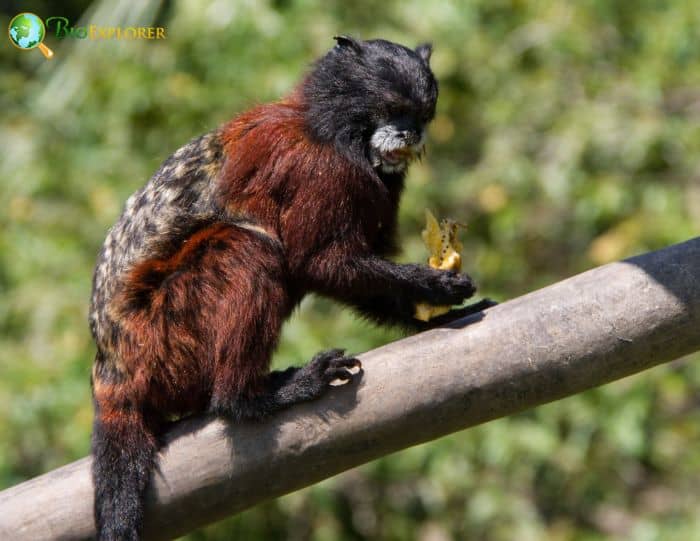
The Andean saddle tamarin[1], also known as the saddleback tamarin (formerly known as the brown-mantled tamarin), is a New World monkey species.
- Their geographic range includes Southeastern Americans from Bolivia, Colombia, Brazil, Peru, and Ecuador.
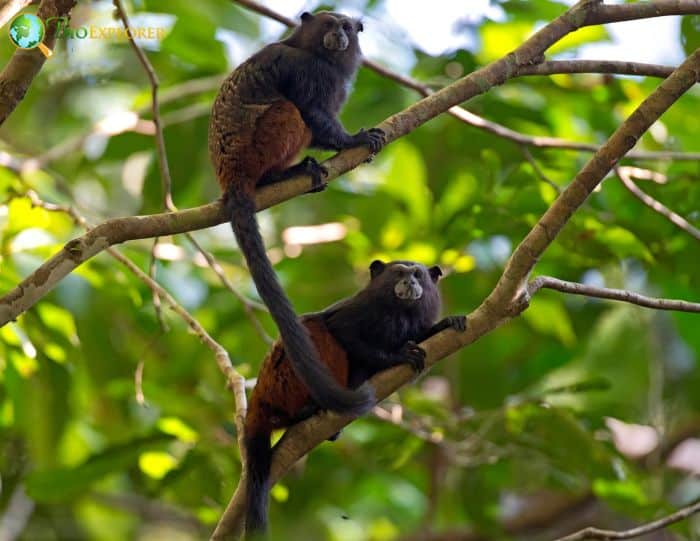
- Dense, dark fur covers this tiny New World monkey’s arms, shoulders, and torso.
- On its back, Mother Nature painted a patch of skin, interwoven yellow-orange stripes with patches of black hair, and created a speckled pattern called “agouti” (which gives the primate its “saddle“).
- Yellow-orange fur drapes the monkey’s hindquarters, and black fur adheres to its long tail and extends to the tip.
- Long, narrow hands, considered an adaptation, help the saddleback tamarin reach into small crevices and catch insects.
- Scalloped ears protrude from a small round head covered in black fur. The snout is flat and covered with white hairs or whiskers in some individuals. These white accents could also decorate the monkey’s forehead.
Andean Saddle-back Tamarin Facts
- Andean saddle tamarins are arboreal and diurnal, meaning they spend most of their time in the trees and are most active during the day.
- They are known to defend their territory against strangers; chases and fights may ensue.
- They aren’t the most loquacious of primates but rely on their little bag of vocalizations to send specific messages.
- The life expectancy of wild saddle tamarins is between 8 and 13 years. However, captive animals have a maximum lifespan of 24.9 years.
- Andean saddleback monkeys are considered “phyletic dwarfs, ” meaning their small size is related to their evolutionary development.
Suggested Reading: Types of Monkeys List
Cite this page
BioExplorer. (2026, August 26). Andean Saddle-back Tamarin. https://www.bioexplorer.net/animals/mammals/monkeys/andean-saddle-back-tamarin/