
Panamanian White-faced Capuchin
| Kingdom | Order | Family | Genus | Species |
|---|---|---|---|---|
| Animalia | Primates | Cebidae | Cebus | Cebus imitator |
- Common Name: Panamanian White-faced Capuchin
- Taxonomy Classification Year: 1903
- Monkey Size: 33.5 to 45.3 cm (13.25 to 17.88)
- Skin Color(s): Black
- Habitat: Forest, rainforest
- Diet: Omnivorous
- Native Countries: Panama

Panamanian White-faced Capuchin Distribution
Countries
Panama ( )
)
)Panamanian White-faced Capuchin Characteristics
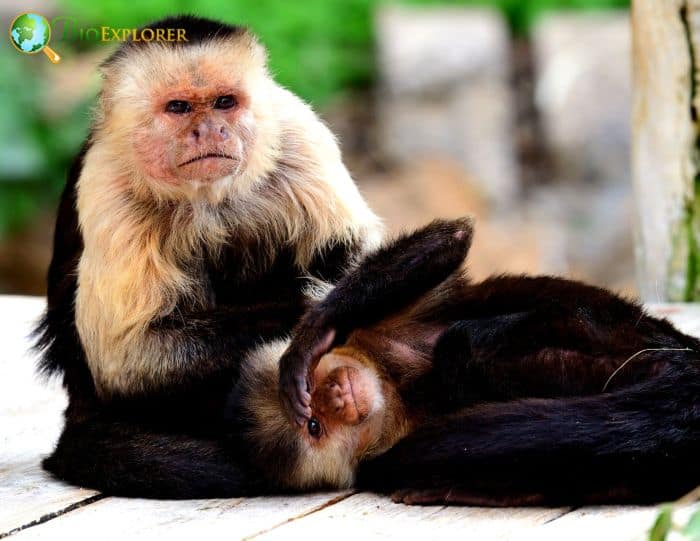
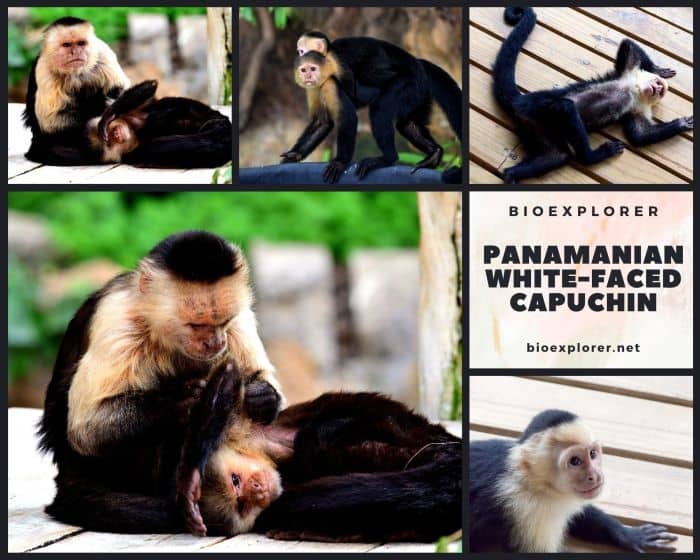
The Panamanian white-faced capuchin[1] (Cebus mimic), also called the Panamanian white-headed capuchin or the Central American white-faced capuchin is a mid-sized New World Monkey in the Cebidae family.
- Like other monkeys in the Cebus genus, the Panamanian white-faced capuchin was named after the order of Capuchin monks: the hoods of these monks closely resemble the coloration of the monkey’s head.
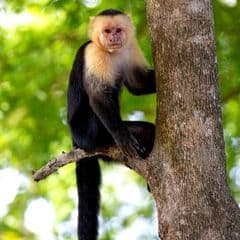
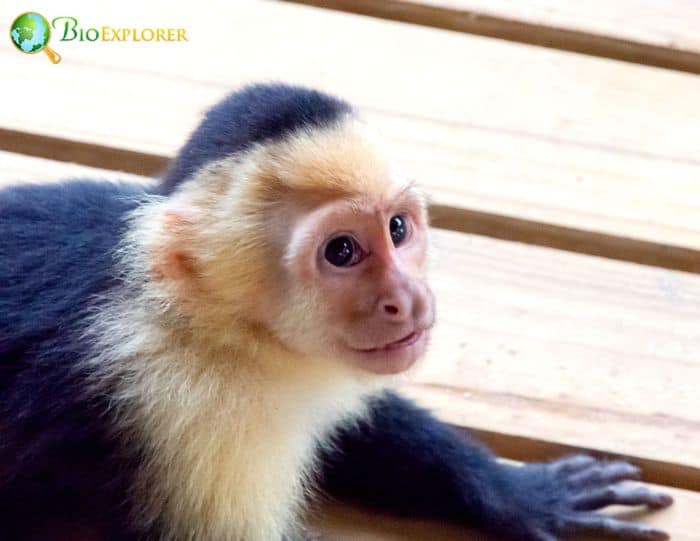
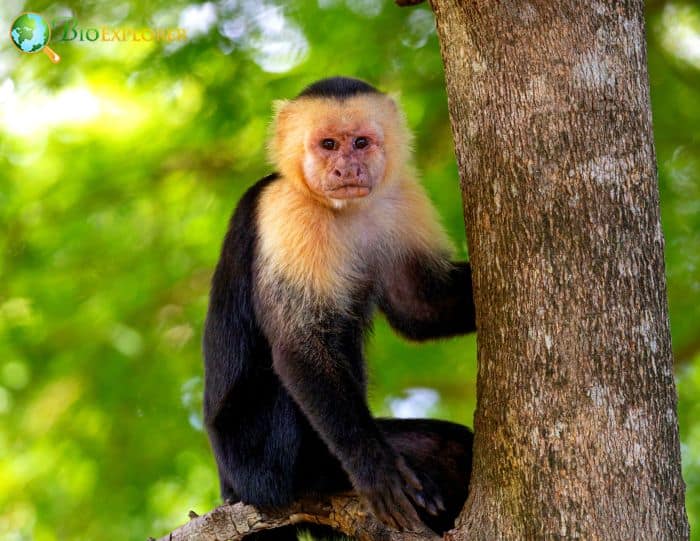
- The Panamanian white-faced capuchin has a predominantly black coat with white to yellow fur on the throat, neck, shoulders, chest, and upper arms.
- The face is pink or creamy white and may have distinctive features such as dark eyebrows or dark patches of fur.
- An area of black fur on the crown is distinctive. It has a prehensile tail that is often curled, giving the white-faced capuchin the nickname “Ringed Tail“.
- The Panamanian white-faced capuchin is similar to the Colombian white-faced capuchin, except that female Panamanian white-faced capuchins have elongated brown or grayish forehead tufts that contrast with pure white cheeks and throat.
What Do Panamanian White-faced Capuchins Eat?
The Panamanian White-faced Capuchin consumes these plant matters but not limited to[¶]:
- Breadnut (Brosimum alicastrum)
- Cedro Macho (Aralia excelsa).
- False Chiggergrape (Coccoloba venosa).
- Strawberrytree (Muntingia calabura)
- Gumbo Limbo (Bursera simaruba).
- Smooth Manjack (Cordia laevigata).
- Chirimoya (Annona spraguei)
- Malaysian Apple (Syzygium malaccense).
- Coconut Palm (Cocos nucifera).
- Conejo (Protium tenuifolium)
- Requia Colorada (Trichilia cipo).
- Guabo Pachón (Inga goldmanii).
- Icecreambean (Inga edulis)
- Guarumo (Cecropia obtusifolia)
- Star Apple (Chrysophyllum cainito).
- Guarumo (Cecropia longipes)
- Hogplum (Spondias mombin)
- Mango (Mangifera indica)
- Angelica Tree (Dendropanax arboreus).
- Panama Hat Plant (Carludovica palmata).
- Amate (Ficus obtusifolia)
- Pachiuba (Socratea exorrhiza)
- False Coffee (Faramea occidentalis).
- Abas (Psidium guajava)
- Panama Tree (Sterculia apetala).
- Jagua (Genipa americana)
Panamanian White-Faced Capuchin Facts
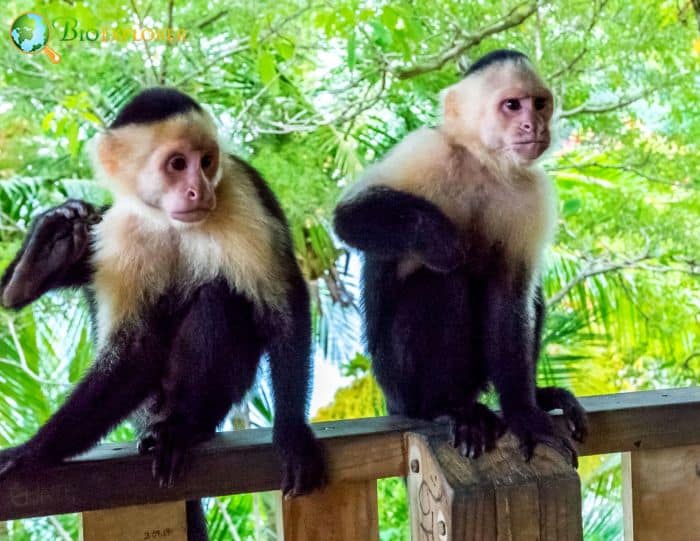
- Native to Central American forests, the Panamanian white-faced capuchin is vital to rainforest ecology for its role in seed and pollen dispersal.
- This capuchin is a brilliant monkey and was trained to help people with paraplegia.
- It lives in groups that can exceed 20 animals and include both male and female species.
- Panamanian white-faced capuchin is known for its use of tools, including rubbing plants on its body in an apparent use of herbal medicine, and also for using tools as weapons and to reach for food.
- It is a long-lived monkey with a maximum age of over 54 years.
Suggested Reading: Different Species of Monkeys
Cite this page
BioExplorer. (2026, September 24). Panamanian White-faced Capuchin. https://www.bioexplorer.net/animals/mammals/monkeys/panamanian-white-faced-capuchin/