Gray-Cheeked Mangabey

Gray Cheeked Mangabey

KingdomOrderFamilyGenusSpecies
AnimaliaPrimatesCercopithecidaeLophocebusLophocebus albigena

Gray-cheeked Mangabey
IUCN Status: Vulnerable
  • Common Name: Gray-cheeked Mangabey
  • Taxonomy Classification Year: 1850
  • Monkey Size: 43 to 73 cm (17 to 29 in)
  • Skin Color(s): Gray or Blackish Gray
  • Habitat: Forest, rainforest
  • Diet: Omnivorous
  • Native Countries: Nigeria, Uganda, Cameroon, Gabon

Gray-cheeked Mangabey Distribution

Author: Al MacDonald Editor: Fritz Lekschas License: CC BY-SA 3.0 ID: ISO 3166-1 or "_[a-zA-Z]" if an ISO code is not available United Arab Emirates Afghanistan Albania Armenia Angola Argentina Austria Australia Azerbaijan Bosnia and Herzegovina Bangladesh Belgium Burkina Faso Bulgaria Burundi Benin Brunei Darussalam Bolivia (Plurinational State of) Brazil Bahamas Bhutan Botswana Belarus Belize Canada Democratic Republic of Congo Central African Republic Congo Switzerland Côte d'Ivoire Chile Cameroon China Colombia Costa Rica Cuba Cabo Verde Cyprus Czechia Germany Denmark Djibouti Dominica Dominican Republic Algeria Ecuador Estonia Egypt Eritrea Spain Ethiopia Finland Falkland Islands (Malvinas) France Gabon United Kingdom of Great Britain and Northern Ireland Georgia Ghana Greenland Gambia Guinea Equatorial Guinea Greece Guatemala Guinea-Bissau Guyana Honduras Croatia Haiti Hungary Indonesia Ireland Israel India Iraq Iran (Islamic Republic of) Iceland Italy Jamaica Jordan Japan Kenya Kyrgyzstan Cambodia Comoros Korea (Democratic People's Republic of) Korea, Republic of Kuwait Kazakhstan Lao People's Democratic Republic Lebanon Saint Lucia Sri Lanka Liberia Lesotho Lithuania Luxembourg Latvia Libya Morocco Moldova, Republic of Montenegro Madagascar North Macedonia Mali Myanmar Mongolia Mauritania Malta Mauritius Maldives Malawi Mexico Malaysia Mozambique Namibia New Caledonia Niger Nigeria Nicaragua Netherlands Norway Nepal New Zealand Oman Panama Peru Papua New Guinea Philippines Pakistan Poland Puerto Rico Portugal Paraguay Qatar Romania Serbia Russian Federation Rwanda Saudi Arabia Solomon Islands Seychelles Sudan Sweden Singapore Slovenia Slovakia Sierra Leone Senegal Somalia Suriname South Sudan Sao Tome and Principe El Salvador Syrian Arab Republic Eswatini Chad Togo Thailand Tajikistan Turkmenistan Tunisia Turkey Trinidad and Tobago Taiwan, Province of China Tanzania, United Republic of Ukraine Uganda United States of America Uruguay Uzbekistan Saint Vincent and the Grenadines Venezuela (Bolivarian Republic of) Viet Nam Vanuatu Yemen South Africa Zambia Zimbabwe
Countries
Nigeria
Uganda
Cameroon
Gabon

Gray-Cheeked Mangabey Characteristics
Gray Cheeked Mangabey

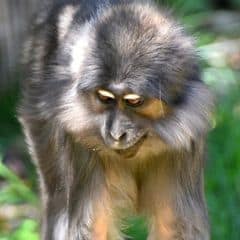
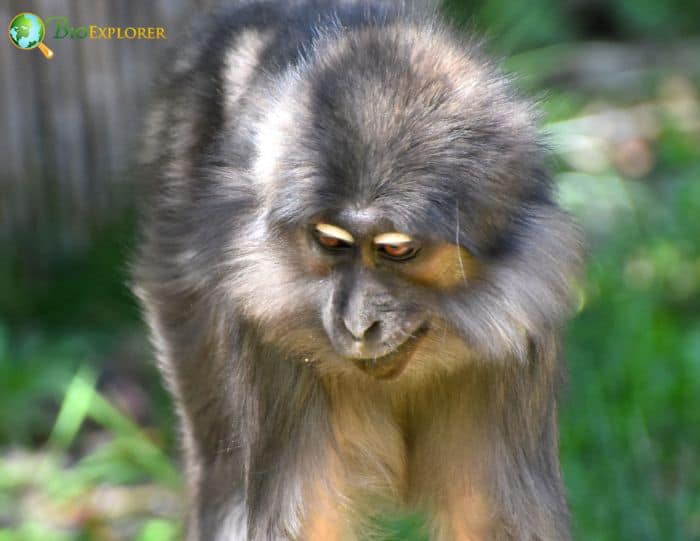
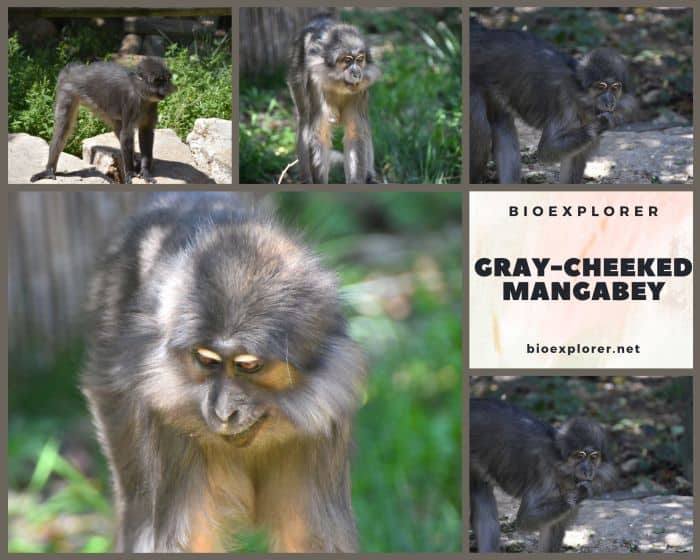
The gray-cheeked mangabey[1] (Lophocebus albigena), also called the white-cheeked mangabey, is an Old World monkey found in the forests of central Africa.

  • The gray-cheeked mangabey is a sizeable arboreal primate with gray and often whitish cheeks.
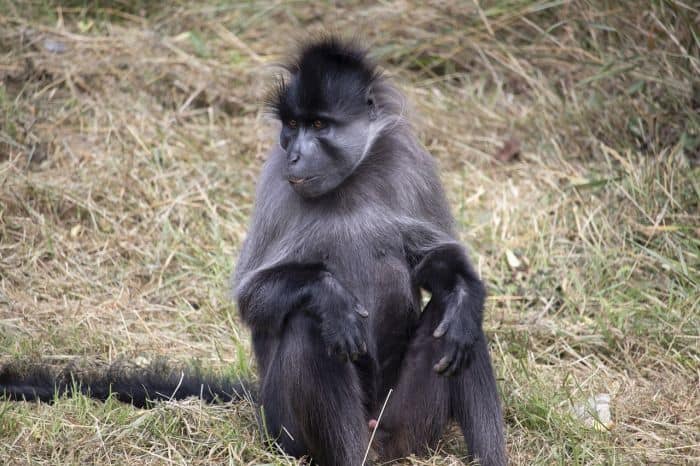
  • Their long, lanky bodies are dark or black gray. L.a. albigena, a nominate subspecies, typically has a black spot on the nape and withers (the area between the shoulder blades).
  • The hair on their head is scruffy and long, resembling small horns above their eyebrows.
  • Their face, eyes, and skin are also dark. In addition, their chest and front legs are heavier than the rest of the body.
  • The long gray or brown hairs on the shoulders and neck form a cape. They have long tails and long limbs that give them balance when running through the forest.
  • Their tail is somewhat prehensile and powerful enough to grab onto branches while leaping through trees.

What Do Gray-cheeked Mangabeys Eat?
What Do Gray Cheeked Mangabeys Eat?

Based on the detailed research published in the African Journal of ecology, the Gray-cheeked Mangabey feeds on these food sources not limited to[¶]:

  • Hexapoda (Insecta)
  • Boleko Nut (Ongokea gore).
  • Butter Tree (Pentadesma butyracea).
  • African Oil Palm (Elaeis guineensis).
  • African Nutmeg (Pycnanthus angolensis).
  • African Teak (Milicia excelsa).
  • African Mammee-Apple (Mammea africana).
  • Horsewood (Clausena anisata)
  • Fig (Ficus)
  • Chinese Banyan (Ficus thonningii).
  • Broom Cluster Fig (Ficus sur).
  • Umbrella Tree (Musanga cecropioides).
  • Boarwood (Symphonia globulifera)
  • Calabash Nutmeg (Monodora myristica).
  • Pokeweed (Phytolacca)
  • Aframomum (Aframomum)
  • Treebind (Cissus)
  • Moambé Jaune (Annickia chlorantha).
  • Emien (Alstonia boonei)
  • Velvet Tamarind (Dialium guineense).
  • Umbrella-Tree (Maesopsis)
  • Trichilia (Trichilia)
  • Djave (Baillonella toxisperma)
  • Inoi Nut (Poga oleosa).
  • Rattan Palm (Eremospatha macrocarpa).
  • Red-Fruited Stinkwood (Celtis mildbraedii).
  • Olon Tendre (Zanthoxylum heitzii).
  • Tropical Almond (Terminalia)
  • Tallow Tree (Allanblackia floribunda).
  • Raffia Palm (Raphia)
  • Persimmons (Diospyros)
  • Hackberry (Celtis)

What Eats Gray-cheeked Mangabeys?
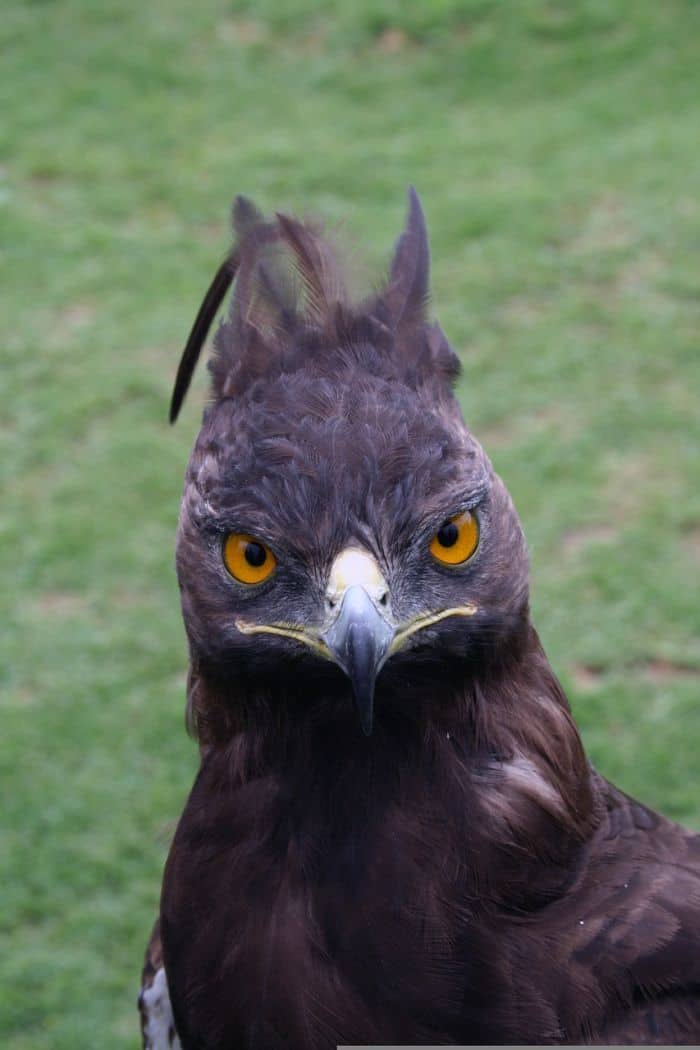
What Eats Gray Cheeked Mangabeys? Crowned Eagles

Humans (Homo sapiens), Crowned eagles (Stephanoaetus coronatus) and Leopards (Panthera pardus) are the primary predators of Gray-cheeked Mangabeys[§].

Gray-Cheeked Mangabey Facts
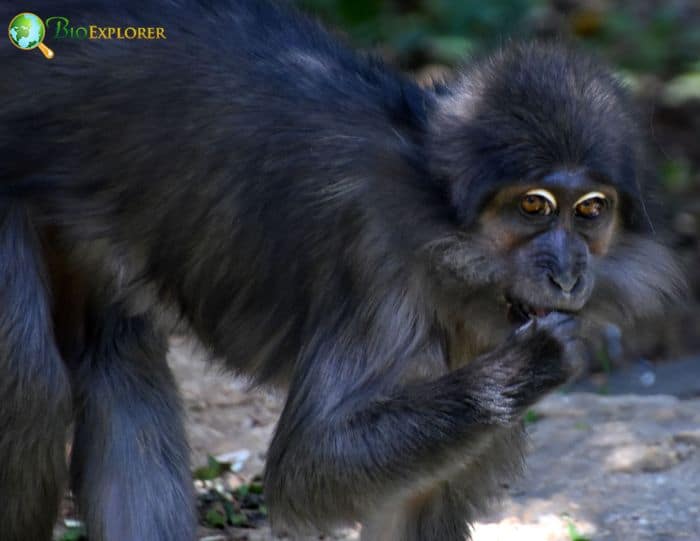
Lophocebus Albigena

  • Gray-cheeked mangabeys belong to the same family (Cercopithecinae) and phylum (Papionini) as mandrills, macaques, and baboons. In fact, they are also sometimes called baboon mangabeys.
  • A single infant is usually born with soft fur and open eyes.
  • If enough food is available, groups of mangabeys will congregate for a while and even group party members.
  • Like baboons, a female mangabey’s buttocks swell and turn pink when they are ready to breed.
  • Gray-cheeked mangabey life expectancy varies depending on diet. For example, troops eating hard-shelled nuts can wear down their teeth much faster and die younger than those eating a softer diet.

Suggested Reading: All Types of Monkeys
Different Eagle Species like the Martial Eagle are capable of preying on Gray-cheeked Mangabeys in their habitats.

Cite this page

Bio Explorer. (2026, January 4). Gray-Cheeked Mangabey. https://www.bioexplorer.net/animals/mammals/monkeys/gray-cheeked-mangabey/

Key References

  • [1]“The Endemic Uganda Mangabey, Lophocebus ugandae, and Other Members of the Albigena-Group (Lophocebus)”. Accessed September 17, 2022. Link.
  • [¶] – Fricke, E.C., Svenning, J. Accelerating homogenization of the global plant-frugivore meta-network. Nature 585, 74-78 (2020). https://doi.org/10.1038/s41586-020-2640-y.
  • [¶] – Seltzer, Carrie; Wysocki, William; Palacios, Melissa; Eickhoff, Anna; Pilla, Hannah; Aungst, Jordan; Mercer, Aaron; Quicho, Jamie; Voss, Neil; Xu, Man; J. Ndangalasi, Henry; C. Lovett, Jon; J. Cordeiro, Norbert (2015): Plant-animal interactions from Africa. figshare. https://dx.doi.org/10.6084/m9.figshare.1526128. De Boer, W.F. and Ntumi, C.P. and Correia, A.U. and Mafuca, J.M., 2000. Diet and distribution of elephant in the Maputo Elephant Reserve; Mozambique. African Journal of Ecology, 38(3), pp.188-201. https://ndownloader.figshare.com/files/2231424
  • [¶] – fgabriel1891/Palm-Frugivore_Interactions_Neo-AfrotropicsZona, S. & Henderson, A. (1989) A review of animal mediated seed dispersal of palms. Selbyana, 11, 6-21. Online Update 2006 ((http://www.virtualherbarium.org/palms/psdispersal.html).
  • [¶] – fgabriel1891/Palm-Frugivore_Interactions_Neo-AfrotropicsPoulsen, J. R.; Clark, C. J.; Connor, E. F.; Smith, T. B.. 2002. Differential resource use by primates and hornbills: Implications for seed dispersal. Ecology. 228-240
  • [§] – Middleton, O.S, Svensson, H, Scharlemann, J.P.W, Faurby, S, Sandom, C.J. CarniDIET 1.0: A database of terrestrial carnivorous mammal diets. Global Ecology and Biogeography. https://doi.org/10.1111/geb.13296. Craig, Christie A., Eleanor I. Brassine, and Daniel M. Parker. “A record of cheetah (Acinonyx jubatus) diet in the Northern Tuli Game Reserve, Botswana. “African Journal of Ecology 55.4 (2017): 697-700.

Leave a Reply

Your email address will not be published. Required fields are marked *