
Order Accipitriformes / Diurnal Birds of Prey

Accipitriformes are an order of birds that includes many of the world's diurnal birds of prey, meaning raptors that hunt during the day. This group includes many types of eagles, as well as hawks, kites, buzzards, and other powerful hunters. These birds are known for their sharp talons, hooked beaks, and strong flight abilities, which help them catch and process prey.
Jump to:
- How to pronounce Accipitriformes?
- Taxonomic Overview of Accipitriformes
- How Many Species Are in Accipitriformes?
- Key Characteristics of Accipitriformes
- Evolutionary History of Accipitriformes
- Families Within the Order Accipitriformes
- Hunting Strategies and Feeding Behavior
- Ecological Role of Accipitriformes
- Accipitriformes Compared to Other Birds of Prey
- Bird Species Belonging to the Order Accipitriformes
- FAQ
- Why Accipitriformes Are Important to Ecosystems
This order matters because Accipitriformes represent one of the most successful and widespread predatory lineages among types of birds on Earth. They play a major role in ecosystems by controlling populations of other types of animals, removing weak or sick prey, and helping maintain ecological balance. Their presence often signals healthy, functioning environments.
For a long time, scientists grouped many birds of prey together based on appearance alone. Modern genetic studies, which examine DNA instead of just physical traits, changed that view. These studies showed that some birds once thought to be close relatives—such as falcons and certain vultures—actually belong to different evolutionary branches.
As a result, Accipitriformes is now understood as a more clearly defined order shaped by deep evolutionary history rather than surface similarities.
How to pronounce Accipitriformes?
Taxonomic Overview of Accipitriformes
Accipitriformes is a distinct order within the class Aves, which includes all birds. Modern classification of this order is based mainly on genetic evidence rather than appearance alone. These genetic studies have helped clarify which birds of prey share a true evolutionary relationship.
Most current classifications recognize 3 core families within Accipitriformes:
- Accipitridae – hawks, eagles, kites, and buzzards
- Pandionidae – the osprey, a fish-eating specialist
- Sagittariidae – the secretary bird, adapted for hunting on land
Some older or alternative classification systems also include New World vultures (family Cathartidae) within Accipitriformes. However, most modern genetic studies place these vultures in a separate order, reflecting a more distant evolutionary relationship despite their similar appearance.
How Many Species Are in Accipitriformes?
There are over 260 living species currently placed within Accipitriformes, making it one of the largest orders of birds of prey. The exact number varies depending on the authority because scientists continue to revise species boundaries based on new genetic and behavioral evidence.
Differences in species counts often result from:
- Genetic studies that split or combine closely related populations
- Ongoing revisions to species and subspecies status
- Regional checklists using different classification standards
Despite these variations, Accipitriformes remains one of the most diverse and well-studied raptor orders.
Key Characteristics of Accipitriformes
Accipitriformes share a set of defining characteristics that distinguish them from other birds. These traits evolved to support a predatory or scavenging lifestyle and are consistent across the order.
Common characteristics include:
- A strong, hooked beak designed for tearing flesh rather than swallowing food whole
- Powerful feet with sharp talons used to seize, restrain, or kill prey
- Excellent vision, allowing precise detection of movement from long distances
- A robust flight system, supporting soaring, gliding, or rapid pursuit
- A diurnal lifestyle, with most species active during daylight hours
Together, these features define Accipitriformes as one of the most specialized and successful groups of predatory birds.

Top 11 Animals With Super Sensors
Evolutionary History of Accipitriformes
Accipitriformes evolved as diurnal birds of prey, with a lineage that emerged tens of millions of years ago after birds began diversifying following the extinction of the dinosaurs. Over time, this group adapted to different hunting strategies and environments, leading to the wide range of raptors seen today.
Modern genetic research clarified these relationships by showing that some birds once grouped together based on appearance were not closely related. This led to major reclassifications, including the separation of falcons into a different order and renewed debate over the placement of vultures.
Today, Accipitriformes is understood as a distinct evolutionary lineage defined by shared ancestry rather than surface similarities.

Evolution of Accipitriformes
Families Within the Order Accipitriformes
Accipitriformes is made up of several closely related families that reflect different evolutionary paths, hunting styles, and ecological roles. While all members share core raptor traits—such as hooked beaks, powerful talons, and sharp vision—each family represents a distinct way that this predatory blueprint evolved.
At a high level, the order includes soaring hawks and eagles, highly specialized fish hunters, ground-hunting raptors, and large scavengers. Together, these families show how Accipitriformes diversified to occupy many of the top predatory niches across the globe.
👉 Explore detailed family relationships, evolutionary differences, and key species in the full Accipitriformes families guide.
Hunting Strategies and Feeding Behavior
Accipitriformes use a wide range of hunting strategies that reflect their physical adaptations and environments. Some species rely on soaring flight to scan large areas for prey, while others hunt from perches or use sudden ambush attacks. A few members of the order specialize in scavenging or ground-based predation.
These different feeding behaviors help explain how so many raptors can coexist without competing for the same food. Each strategy represents a different solution to the challenge of finding and capturing prey.
👉 Explore the full range of hunting methods and feeding styles in the Accipitriformes hunting strategies guide.
Ecological Role of Accipitriformes
Accipitriformes play a critical role in maintaining balance within ecosystems. As top predators and scavengers, they help regulate populations of other animals, remove weak or sick individuals, and limit the spread of disease. Their presence often reflects the overall health of an environment.
Because these birds sit high in the food chain, changes in their populations can signal deeper ecological problems. For this reason, raptors are widely used as indicators of ecosystem stability and environmental change.
👉 Learn how Accipitriformes shape ecosystems and why they matter in the Accipitriformes ecological role guide.
Accipitriformes Compared to Other Birds of Prey
Birds of prey may look similar at first glance, but they do not all belong to the same evolutionary group. Accipitriformes is one major raptor order, while other predatory birds followed separate evolutionary paths despite sharing similar hunting roles.
Accipitriformes vs Falconiformes
Hawks and eagles were once grouped together with falcons based on appearance and hunting behavior. Modern genetic research revealed that falcons are more closely related to parrots and songbirds than to hawks and eagles.
Accipitriformes vs Strigiformes
Owls are also birds of prey, but they evolved along a separate lineage with very different adaptations. While Accipitriformes hunt mainly during the day using vision, owls are mostly nocturnal and rely heavily on sound.
Bird Species Belonging to the Order Accipitriformes
Accipitriformes includes hundreds of living species, ranging from small kites to some of the largest birds of prey on Earth. These species vary widely in size, hunting style, and habitat, but all share the core traits that define the order.
Because of this diversity, individual species are best explored in focused lists rather than on a single page. Grouping species by family, region, or ecological role makes it easier to understand how different raptors fit within the broader evolutionary picture.
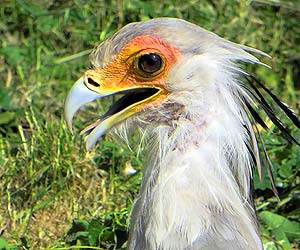 Secretary bird (Sagittarius serpentarius)
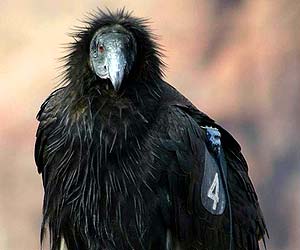 California condor (Gymnogyps californianus)
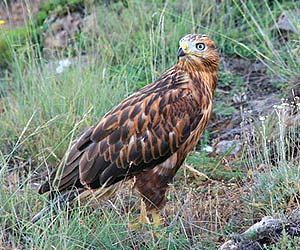 Long-legged Buzzard (Buteo rufinus)
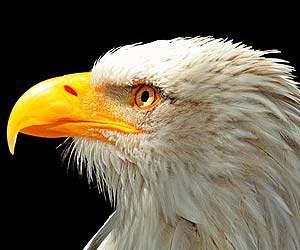 Bald eagle (Haliaeetus leucocephalus)
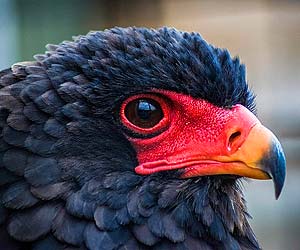 Bateleur Eagle (Terathopius ecaudatus)
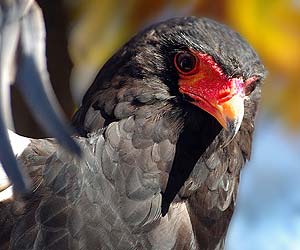 Short-toed Snake Eagle (Circaetus gallicus)
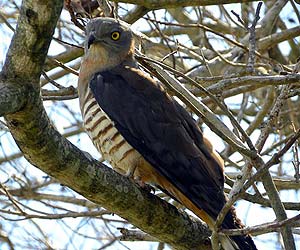 Pacific Baza (Aviceda subcristat)
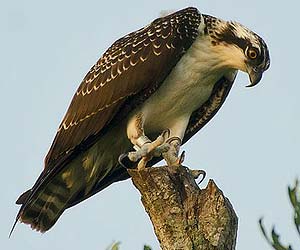 Osprey (Pandion Haliaetus)
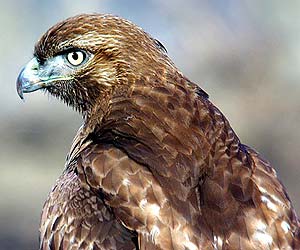 Red-tailed Hawk (Buteo jamaicensis)
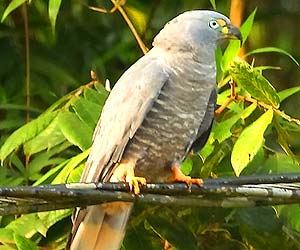 Hook-billed Kite (Chondrohierax uncinatus)
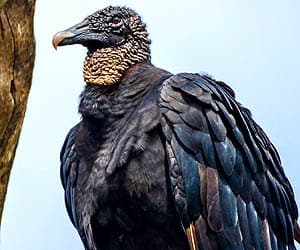 Black Vulture (Coragyps atratus)
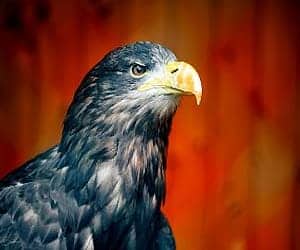 Crowned Eagle (Stephanoaetus coronatus)
FAQ
Yes. Accipitriformes includes diurnal birds of prey such as hawks, eagles, kites, and related raptors. All members share adaptations for hunting or scavenging.
Although falcons look and behave like hawks, genetic studies show they are not closely related. Falcons belong to a separate order, Falconiformes, and evolved similar traits independently.
New World vultures are sometimes discussed alongside Accipitriformes due to their appearance. However, most modern classifications place them in a separate order based on genetic evidence.
Members of this order occur across most of the world, occupying a wide range of environments. Their broad distribution reflects a long evolutionary history and strong adaptability.
Why Accipitriformes Are Important to Ecosystems
Accipitriformes represent one of the most successful predatory bird lineages in Earth's history. Their long evolutionary journey produced highly specialized hunters capable of adapting to changing environments over millions of years.
As top predators and scavengers, these birds help maintain ecological balance by regulating animal populations and removing carrion from ecosystems. Their absence can lead to cascading effects that disrupt food webs and ecosystem stability.
Because Accipitriformes sit high in the food chain, they are especially sensitive to environmental change. Protecting these birds helps preserve not only individual species, but also the evolutionary and ecological systems they support.
Cite this page
Bio Explorer. (2026, March 20). Order Accipitriformes / Diurnal Birds of Prey. https://www.bioexplorer.net/order-accipitriformes/